SOLDES
Jusqu'à -70% sur une sélection d'articles*

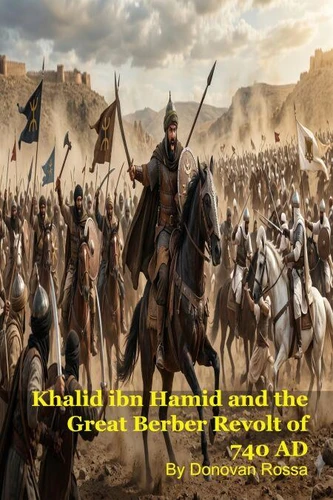
Khalid ibn Hamid and the Great Berber Revolt of 740 AD
Par :Formats :
Disponible dans votre compte client Decitre ou Furet du Nord dès validation de votre commande. Le format ePub est :
- Compatible avec une lecture sur My Vivlio (smartphone, tablette, ordinateur)
- Compatible avec une lecture sur liseuses Vivlio
- Pour les liseuses autres que Vivlio, vous devez utiliser le logiciel Adobe Digital Edition. Non compatible avec la lecture sur les liseuses Kindle, Remarkable et Sony
 , qui est-ce ?
Notre partenaire de plateforme de lecture numérique où vous retrouverez l'ensemble de vos ebooks gratuitement
Pour en savoir plus sur nos ebooks, consultez notre aide en ligne ici
C'est si simple ! Lisez votre ebook avec l'app Vivlio sur votre tablette, mobile ou ordinateur :

- FormatePub
- ISBN8235866140
- EAN9798235866140
- Date de parution26/04/2026
- Protection num.pas de protection
- Infos supplémentairesepub
- ÉditeurIoakim Ioakim
Résumé
Khalid ibn Hamid and the Great Berber Revolt of 740 ADIn 740 AD, a Zenata Berber chieftain named Khalid ibn Hamid al-Zanati led a coalition of North African tribes in one of the most consequential military campaigns of the medieval world, and then vanished from history as completely as he had entered it. The Great Berber Revolt began in Tangier, where decades of systematic abuse by the Umayyad Caliphate had pushed the Berber Muslim population to the breaking point.
Taxed as non-believers despite their conversion to Islam, stripped of their children as tribute, and declared a conquered people by their own governors, the Berbers rose under the banner of Sufrite Kharijite theology, a radical Islamic egalitarianism that declared any pious Muslim fit to lead, regardless of ethnic origin. What followed was a military revolution. At the Battle of the Nobles in 740 AD, Khalid destroyed the aristocratic cavalry of the Ifriqiyan province.
At Bagdoura in 741 AD, using slingers who targeted horses rather than riders, stampeding wild mares, and a brilliant encirclement maneuver, he annihilated the Syrian expeditionary force sent to crush the revolt, one of the largest armies the Umayyad Caliphate had ever fielded in the west. The consequences reshaped two continents. The western Maghreb won permanent independence. Berber garrisons abandoned their Spanish frontier posts, allowing the Christian kingdom of Asturias to expand into territory that would become the heartland of medieval Castile.
The political instability that followed contributed to the fall of the Umayyad dynasty itself in 750 AD and, ultimately, to the emergence of the independent Umayyad Emirate of Córdoba, one of the medieval world's most brilliant civilizations. This is the story of a man who changed the world and then disappeared, and of the people whose centuries of resistance, cultural vitality, and fierce social solidarity made that change possible.
Taxed as non-believers despite their conversion to Islam, stripped of their children as tribute, and declared a conquered people by their own governors, the Berbers rose under the banner of Sufrite Kharijite theology, a radical Islamic egalitarianism that declared any pious Muslim fit to lead, regardless of ethnic origin. What followed was a military revolution. At the Battle of the Nobles in 740 AD, Khalid destroyed the aristocratic cavalry of the Ifriqiyan province.
At Bagdoura in 741 AD, using slingers who targeted horses rather than riders, stampeding wild mares, and a brilliant encirclement maneuver, he annihilated the Syrian expeditionary force sent to crush the revolt, one of the largest armies the Umayyad Caliphate had ever fielded in the west. The consequences reshaped two continents. The western Maghreb won permanent independence. Berber garrisons abandoned their Spanish frontier posts, allowing the Christian kingdom of Asturias to expand into territory that would become the heartland of medieval Castile.
The political instability that followed contributed to the fall of the Umayyad dynasty itself in 750 AD and, ultimately, to the emergence of the independent Umayyad Emirate of Córdoba, one of the medieval world's most brilliant civilizations. This is the story of a man who changed the world and then disappeared, and of the people whose centuries of resistance, cultural vitality, and fierce social solidarity made that change possible.