
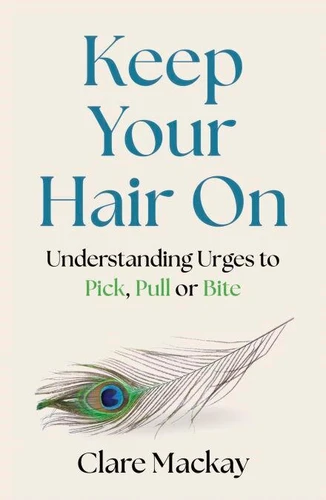
Keep Your Hair On. Understanding Urges to Pick, Pull or Bite
Par :Formats :
Disponible dans votre compte client Decitre ou Furet du Nord dès validation de votre commande. Le format ePub protégé est :
- Compatible avec une lecture sur My Vivlio (smartphone, tablette, ordinateur)
- Compatible avec une lecture sur liseuses Vivlio
- Pour les liseuses autres que Vivlio, vous devez utiliser le logiciel Adobe Digital Edition. Non compatible avec la lecture sur les liseuses Kindle, Remarkable et Sony
- Non compatible avec un achat hors France métropolitaine
 , qui est-ce ?
Notre partenaire de plateforme de lecture numérique où vous retrouverez l'ensemble de vos ebooks gratuitement
Pour en savoir plus sur nos ebooks, consultez notre aide en ligne ici
C'est si simple ! Lisez votre ebook avec l'app Vivlio sur votre tablette, mobile ou ordinateur :

- Nombre de pages224
- FormatePub
- ISBN978-1-4721-4992-3
- EAN9781472149923
- Date de parution02/04/2026
- Protection num.Adobe DRM
- Infos supplémentairesepub
- ÉditeurRobinson
Résumé
Blending science and lived experience, this book offers a compassionate, stigma-busting exploration of body-focused repetitive behaviours (BFRBs) - revealing why they happen, why they bother us, and how understanding them may be the key to healing. Keep Your Hair On combines personal experience with scientific inquiry to explore the misunderstood world of hair pulling, skin picking and nail biting.
These behaviours are fairly common and can cause a lot of distress, but have been largely neglected by medical science, leaving many to suffer in silence. Neuroscientist Clare Mackay shares her own four-decade struggle with hair pulling, while examining what drives these behaviours and why they can make people feel so bad. Drawing on psychology, neuroscience, animal behaviour, dermatology and lived experience, she challenges the stigma and oversimplified assumptions surrounding BFRBs.
Mackay offers compassionate insights into why these behaviours develop, why they're so hard to stop, and how shame compounds the struggle. Rather than promoting quick fixes, she encourages understanding over judgement and introduces new avenues for management, including the power of self-compassion. This is not a self-help manual, but it may help - by reframing BFRBs not as signs of personal failure, but as interesting, deeply human behaviours that deserve curiosity, care and connection.
These behaviours are fairly common and can cause a lot of distress, but have been largely neglected by medical science, leaving many to suffer in silence. Neuroscientist Clare Mackay shares her own four-decade struggle with hair pulling, while examining what drives these behaviours and why they can make people feel so bad. Drawing on psychology, neuroscience, animal behaviour, dermatology and lived experience, she challenges the stigma and oversimplified assumptions surrounding BFRBs.
Mackay offers compassionate insights into why these behaviours develop, why they're so hard to stop, and how shame compounds the struggle. Rather than promoting quick fixes, she encourages understanding over judgement and introduces new avenues for management, including the power of self-compassion. This is not a self-help manual, but it may help - by reframing BFRBs not as signs of personal failure, but as interesting, deeply human behaviours that deserve curiosity, care and connection.