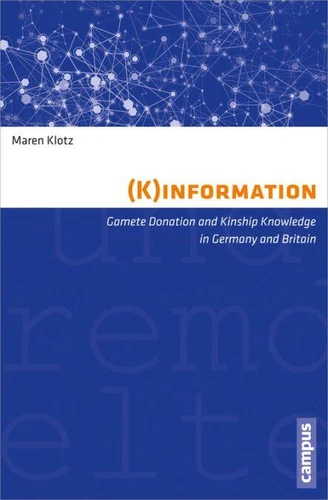
(K)information. Gamete Donation and Kinship Knowledge in Germany and Britain
Par :Formats :
Disponible dans votre compte client Decitre ou Furet du Nord dès validation de votre commande. Le format PDF est :
- Compatible avec une lecture sur My Vivlio (smartphone, tablette, ordinateur)
- Compatible avec une lecture sur liseuses Vivlio
- Pour les liseuses autres que Vivlio, vous devez utiliser le logiciel Adobe Digital Edition. Non compatible avec la lecture sur les liseuses Kindle, Remarkable et Sony
 , qui est-ce ?
Notre partenaire de plateforme de lecture numérique où vous retrouverez l'ensemble de vos ebooks gratuitement
Pour en savoir plus sur nos ebooks, consultez notre aide en ligne ici
C'est si simple ! Lisez votre ebook avec l'app Vivlio sur votre tablette, mobile ou ordinateur :

- Nombre de pages383
- FormatPDF
- ISBN978-3-593-42271-8
- EAN9783593422718
- Date de parution15/05/2014
- Protection num.Digital Watermarking
- Taille4 Mo
- Infos supplémentairespdf
- ÉditeurCampus
Résumé
Openness about sperm and egg donation and the regulation of donor anonymity or non-anonymity are new phenomena. How do affected families, clinics, and regulators deal with information about gamete donors and the donation itself? And how does this knowledge management contribute to the creation and enactment of kinship? Addressing these questions in Germany and Britain, this ethnography makes a comparative contribution to the empirical and theoretical analysis of kin-formation and social change.
Maren Klotz reveals a contemporary renegotiation of the values of privacy, information-sharing, and connectedness as they relate to the social, clinical, and regulatory management of kinship information.
Transparency, not genetics, is the moral imperative, and instead of an unambiguously discernible "geneticization, " her findings on donor non-anonymity and parental openness display a pattern of "transparentization." This pattern represents a shift in authority over kinship away from the sometimes highhanded reproductive medical profession towards concerned groups, parents-by-donation, and policymakers. Bekommt ein Paar ein Kind mithilfe von gespendeten Ei- und Samenzellen, stellt sich die Frage, wie diese Familie mit dem Wissen um die Spende im Alltag umgeht.
Maren Klotz untersucht, wie Verwandtschaft vor diesem Hintergrund konstruiert wird. Sie zeichnet ein Bild von Familiengründung im 21. Jahrhundert, das weniger von einer Relevanz genetischen Wissens geprägt ist, als vielmehr von Transparenz und Informationsfreiheit als neuem moralischem Gebot. Ausgezeichnet mit dem Humboldt-Preis 2013 der Humboldt-Universität zu Berlin.
Transparency, not genetics, is the moral imperative, and instead of an unambiguously discernible "geneticization, " her findings on donor non-anonymity and parental openness display a pattern of "transparentization." This pattern represents a shift in authority over kinship away from the sometimes highhanded reproductive medical profession towards concerned groups, parents-by-donation, and policymakers. Bekommt ein Paar ein Kind mithilfe von gespendeten Ei- und Samenzellen, stellt sich die Frage, wie diese Familie mit dem Wissen um die Spende im Alltag umgeht.
Maren Klotz untersucht, wie Verwandtschaft vor diesem Hintergrund konstruiert wird. Sie zeichnet ein Bild von Familiengründung im 21. Jahrhundert, das weniger von einer Relevanz genetischen Wissens geprägt ist, als vielmehr von Transparenz und Informationsfreiheit als neuem moralischem Gebot. Ausgezeichnet mit dem Humboldt-Preis 2013 der Humboldt-Universität zu Berlin.