SOLDES
Jusqu'à -70% sur une sélection d'articles*

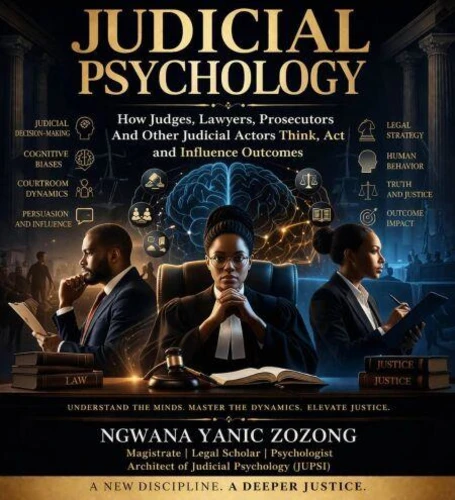
JUDICIAL PSYCHOLOGY How Judges, Lawyers, Prosecutors and Other Judicial Actors Think, Act and Influence Outcomes. 1
Par :Formats :
Disponible dans votre compte client Decitre ou Furet du Nord dès validation de votre commande. Le format ePub est :
- Compatible avec une lecture sur My Vivlio (smartphone, tablette, ordinateur)
- Compatible avec une lecture sur liseuses Vivlio
- Pour les liseuses autres que Vivlio, vous devez utiliser le logiciel Adobe Digital Edition. Non compatible avec la lecture sur les liseuses Kindle, Remarkable et Sony
 , qui est-ce ?
Notre partenaire de plateforme de lecture numérique où vous retrouverez l'ensemble de vos ebooks gratuitement
Pour en savoir plus sur nos ebooks, consultez notre aide en ligne ici
C'est si simple ! Lisez votre ebook avec l'app Vivlio sur votre tablette, mobile ou ordinateur :

- FormatePub
- ISBN8235208544
- EAN9798235208544
- Date de parution15/04/2026
- Protection num.pas de protection
- Infos supplémentairesepub
- ÉditeurIoakim Ioakim
Résumé
JUDICIAL PSYCHOLOGYHow Judges, Lawyers, Prosecutors and Other Judicial Actors Think, Act and Influence OutcomesBy Ngwana Yanic ZozongMagistrate | Legal Scholar | Psychologist | Architect of Judicial Psychology (JUPSI)When Law Meets the Human MindWhat truly determines the outcome of a case?Is it the law as written-or the people who interpret, argue, and apply it?Behind every judgment lies a complex human process.
Judges reason under pressure. Lawyers frame arguments strategically. Prosecutors balance institutional duty with persuasion. Witnesses recall events imperfectly. Litigants, victims, and defendants act under fear, expectation, or survival instinct. Even the State itself-through its structure and ideology-shapes how justice is delivered. This book brings that hidden dimension to light. A New Discipline for Modern JusticeJudicial Psychology introduces a bold and necessary shift:Justice must be understood not only as a system of rules, but as a system of human behavior and interaction.
This work establishes Judicial Psychology as a distinct and comprehensive discipline, focused on how all judicial actors:- Think under uncertainty- Act within structured legal environments- Influence decisions and outcomesIt moves beyond traditional legal analysis to provide a human-centered framework for understanding and improving justice. From Courtroom Actors to a Complete Justice EcosystemUnlike conventional legal texts that focus narrowly on judges or doctrine, this book expands the field to include the full spectrum of actors in the justice system:- Judges as decision-makers and cognitive regulators- Lawyers as strategic advocates and persuaders- Prosecutors as institutional actors balancing power and responsibility- Litigants and defendants navigating risk, fear, and strategy- Victims seeking justice, recognition, and closure- Witnesses and experts shaping factual narratives- Investigators constructing evidentiary foundations- The State influencing justice through its political, economic, and ideological structure- Arbitrators, mediators, and legal advisors shaping outcomes beyond traditional courtsTogether, these actors form a dynamic psychological ecosystem, where outcomes are shaped not only by law, but by interaction, perception, and influence.
A Structured System: Theory, Science, and PracticeThis book is designed to operate on three levels:1. A Foundational Academic WorkIt defines the nature, scope, theories, and branches of Judicial Psychology, positioning it within contemporary legal and psychological scholarship.2. A Professional Operational ManualIt provides practical frameworks and structured methods for:- Judicial decision-making- Legal advocacy and persuasion- Prosecutorial strategy and responsibilityThese tools are designed for real-world application in courtrooms and legal institutions.3.
A Framework for Institutional ReformThe book introduces a Global Doctrine on Judicial Psychology, offering insights for:- Strengthening judicial independence- Improving fairness and consistency- Enhancing trust in justice systems
Judges reason under pressure. Lawyers frame arguments strategically. Prosecutors balance institutional duty with persuasion. Witnesses recall events imperfectly. Litigants, victims, and defendants act under fear, expectation, or survival instinct. Even the State itself-through its structure and ideology-shapes how justice is delivered. This book brings that hidden dimension to light. A New Discipline for Modern JusticeJudicial Psychology introduces a bold and necessary shift:Justice must be understood not only as a system of rules, but as a system of human behavior and interaction.
This work establishes Judicial Psychology as a distinct and comprehensive discipline, focused on how all judicial actors:- Think under uncertainty- Act within structured legal environments- Influence decisions and outcomesIt moves beyond traditional legal analysis to provide a human-centered framework for understanding and improving justice. From Courtroom Actors to a Complete Justice EcosystemUnlike conventional legal texts that focus narrowly on judges or doctrine, this book expands the field to include the full spectrum of actors in the justice system:- Judges as decision-makers and cognitive regulators- Lawyers as strategic advocates and persuaders- Prosecutors as institutional actors balancing power and responsibility- Litigants and defendants navigating risk, fear, and strategy- Victims seeking justice, recognition, and closure- Witnesses and experts shaping factual narratives- Investigators constructing evidentiary foundations- The State influencing justice through its political, economic, and ideological structure- Arbitrators, mediators, and legal advisors shaping outcomes beyond traditional courtsTogether, these actors form a dynamic psychological ecosystem, where outcomes are shaped not only by law, but by interaction, perception, and influence.
A Structured System: Theory, Science, and PracticeThis book is designed to operate on three levels:1. A Foundational Academic WorkIt defines the nature, scope, theories, and branches of Judicial Psychology, positioning it within contemporary legal and psychological scholarship.2. A Professional Operational ManualIt provides practical frameworks and structured methods for:- Judicial decision-making- Legal advocacy and persuasion- Prosecutorial strategy and responsibilityThese tools are designed for real-world application in courtrooms and legal institutions.3.
A Framework for Institutional ReformThe book introduces a Global Doctrine on Judicial Psychology, offering insights for:- Strengthening judicial independence- Improving fairness and consistency- Enhancing trust in justice systems