SOLDES
Jusqu'à -70% sur une sélection d'articles*

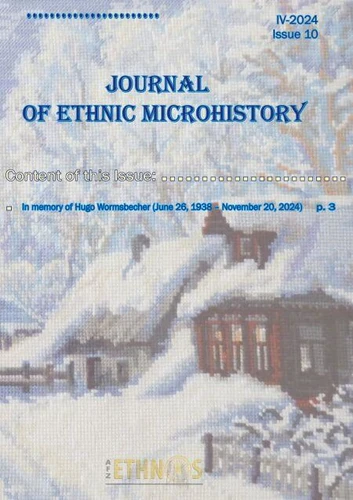
Journal of Ethnic Microhistory. Issue 10, IV-2024
Par :Formats :
Disponible dans votre compte client Decitre ou Furet du Nord dès validation de votre commande. Le format ePub est :
- Compatible avec une lecture sur My Vivlio (smartphone, tablette, ordinateur)
- Compatible avec une lecture sur liseuses Vivlio
- Pour les liseuses autres que Vivlio, vous devez utiliser le logiciel Adobe Digital Edition. Non compatible avec la lecture sur les liseuses Kindle, Remarkable et Sony
 , qui est-ce ?
Notre partenaire de plateforme de lecture numérique où vous retrouverez l'ensemble de vos ebooks gratuitement
Pour en savoir plus sur nos ebooks, consultez notre aide en ligne ici
C'est si simple ! Lisez votre ebook avec l'app Vivlio sur votre tablette, mobile ou ordinateur :

- Nombre de pages64
- FormatePub
- ISBN978-3-7693-9630-0
- EAN9783769396300
- Date de parution26/02/2025
- Protection num.Digital Watermarking
- Taille9 Mo
- Infos supplémentairesepub
- ÉditeurBoD - Books on Demand
Résumé
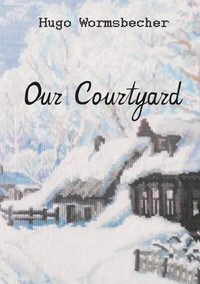
Issue 10, IV-2024 of Journal of Ethnic Microhistory is devoted to an attempt of the German registered association Training and Research Center ETHNOS to cinematize the novel "Our Courtyard" by Hugo Wormsbecher - the classic of the Russia-German literature.
Hugo (Gustavovich) Wormsbecher was born in 1938 in the Autonomous Soviet Socialist Republic of the Volga Germans. In 1941, he was exiled to Siberia, where he grew up.
He worked as a turner, electrician, in a topographical expedition in the semi-deserts of Kazakhstan and in the Alatau Mountains, then - as a teacher, a staff of the editorial boards of the newspapers "Freundschaft" (Friendship) in Zelinograd, "Neues Leben" (New Life) and the editor-in-chief of the almanac "Heimatliche Weiten" (The Vastnesses of Homeland) in Moskau. "Hugo Wormsbecher's story "Our Courtyard, " which was written in 1969 and appeared in the almanac "Heimatliche Weiten" in Moscow in 1984, can be considered a pioneering achievement in Russian-German literature.
With the story "Our Courtyard" Hugo Wormsbecher has created an outstanding text that belongs in the canon of German and Russian literature. I would like to support the attempt to film the text in every respect. It would be a major undertaking and would enrich the collective memory in every way." (Prof. Dr. Carsten Gansel) Hugo Wormsbecher has been in the midst of the movement of the Russia-Germans for their rehabilitation since 1963.
After the liquidation of the Volga German Autonomous Soviet Socialist Republic and the deportation of all Russia-Germans - the group of the Russia-Germans activists emerged; it moved from silent patience and individual initiatives to the collective action to rehabilitate Russia-Germans and to restore their statehood. Hugo Wormsbecher was one of the founders of the society "Wiedergeburt" (Rebirth), of the International Association of the Russia-Germans, and of the Federal Cultural Autonomy of the Russia-Germans
He worked as a turner, electrician, in a topographical expedition in the semi-deserts of Kazakhstan and in the Alatau Mountains, then - as a teacher, a staff of the editorial boards of the newspapers "Freundschaft" (Friendship) in Zelinograd, "Neues Leben" (New Life) and the editor-in-chief of the almanac "Heimatliche Weiten" (The Vastnesses of Homeland) in Moskau. "Hugo Wormsbecher's story "Our Courtyard, " which was written in 1969 and appeared in the almanac "Heimatliche Weiten" in Moscow in 1984, can be considered a pioneering achievement in Russian-German literature.
With the story "Our Courtyard" Hugo Wormsbecher has created an outstanding text that belongs in the canon of German and Russian literature. I would like to support the attempt to film the text in every respect. It would be a major undertaking and would enrich the collective memory in every way." (Prof. Dr. Carsten Gansel) Hugo Wormsbecher has been in the midst of the movement of the Russia-Germans for their rehabilitation since 1963.
After the liquidation of the Volga German Autonomous Soviet Socialist Republic and the deportation of all Russia-Germans - the group of the Russia-Germans activists emerged; it moved from silent patience and individual initiatives to the collective action to rehabilitate Russia-Germans and to restore their statehood. Hugo Wormsbecher was one of the founders of the society "Wiedergeburt" (Rebirth), of the International Association of the Russia-Germans, and of the Federal Cultural Autonomy of the Russia-Germans
A propos de Walther Dr. Friesen
6,99 €
6,99 €
3,49 €