SOLDES
Jusqu'à -70% sur une sélection d'articles*

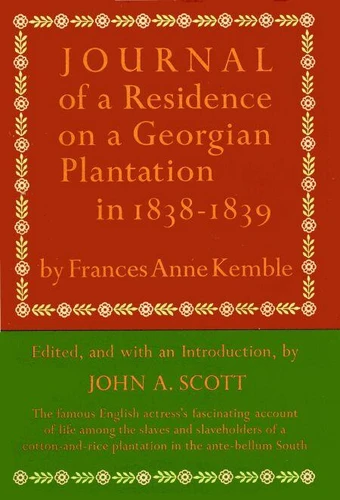
Journal of a Residence on a Georgian Plantation in 1838-1839
Par :Formats :
Disponible dans votre compte client Decitre ou Furet du Nord dès validation de votre commande. Le format ePub protégé est :
- Compatible avec une lecture sur My Vivlio (smartphone, tablette, ordinateur)
- Compatible avec une lecture sur liseuses Vivlio
- Pour les liseuses autres que Vivlio, vous devez utiliser le logiciel Adobe Digital Edition. Non compatible avec la lecture sur les liseuses Kindle, Remarkable et Sony
- Non compatible avec un achat hors France métropolitaine
 , qui est-ce ?
Notre partenaire de plateforme de lecture numérique où vous retrouverez l'ensemble de vos ebooks gratuitement
Pour en savoir plus sur nos ebooks, consultez notre aide en ligne ici
C'est si simple ! Lisez votre ebook avec l'app Vivlio sur votre tablette, mobile ou ordinateur :

- Nombre de pages432
- FormatePub
- ISBN978-0-307-82967-2
- EAN9780307829672
- Date de parution04/09/2013
- Protection num.Adobe DRM
- Taille3 Mo
- Infos supplémentairesepub
- ÉditeurKnopf
Résumé
Fanny Kemble was one of the leading lights of the English theater in the nineteenth century. During a triumphant tour of America, she met and married a wealthy Philadelphian, Pierce Butler, part of whose fortune derived from his family's vast cotton and rice plantation on the Sea Islands of Georgia. After their marriage, she spent several months (December 1838 to April 1839) living on the plantation.
Profoundly shocked by what she saw, she recorded her observations of plantation life in a series of journal entries written as letters to a friend. But she never sent the letters, and it was not until the Civil War was on and Fanny was divorced from her husband and living in England, were they published. She is a reporter par excellence and records in vivid detail not just her own reactions, but the day-to-day operations of the estate as a business enterprise, the lives of the several "classes" of Negro slaves and their white masters, and the plantation's landscape of swamps and woods, canals and rivers, stately houses and decrepit hovels.
Her account is filled with drama: duels, deaths, jealousies, and episodes of humor and tenderness which lighten the gloom but also accentuate the sadness of a world of toil and misery.
Profoundly shocked by what she saw, she recorded her observations of plantation life in a series of journal entries written as letters to a friend. But she never sent the letters, and it was not until the Civil War was on and Fanny was divorced from her husband and living in England, were they published. She is a reporter par excellence and records in vivid detail not just her own reactions, but the day-to-day operations of the estate as a business enterprise, the lives of the several "classes" of Negro slaves and their white masters, and the plantation's landscape of swamps and woods, canals and rivers, stately houses and decrepit hovels.
Her account is filled with drama: duels, deaths, jealousies, and episodes of humor and tenderness which lighten the gloom but also accentuate the sadness of a world of toil and misery.