SOLDES
Jusqu'à -70% sur une sélection d'articles*

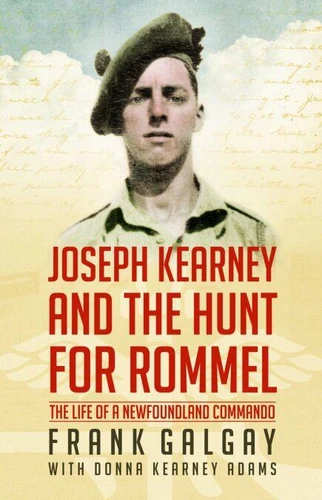
Joseph Kearney and the Hunt for Rommel. The Life of a Newfoundland Commando
Par : ,Formats :
Disponible dans votre compte client Decitre ou Furet du Nord dès validation de votre commande. Le format ePub est :
- Compatible avec une lecture sur My Vivlio (smartphone, tablette, ordinateur)
- Compatible avec une lecture sur liseuses Vivlio
- Pour les liseuses autres que Vivlio, vous devez utiliser le logiciel Adobe Digital Edition. Non compatible avec la lecture sur les liseuses Kindle, Remarkable et Sony
 , qui est-ce ?
Notre partenaire de plateforme de lecture numérique où vous retrouverez l'ensemble de vos ebooks gratuitement
Pour en savoir plus sur nos ebooks, consultez notre aide en ligne ici
C'est si simple ! Lisez votre ebook avec l'app Vivlio sur votre tablette, mobile ou ordinateur :

- FormatePub
- ISBN978-1-77117-689-7
- EAN9781771176897
- Date de parution12/09/2018
- Protection num.Digital Watermarking
- Taille15 Mo
- Infos supplémentairesepub
- ÉditeurFlanker Press
Résumé
This is the fascinating story of a young Newfoundlander's journey to hunt the infamous General Erwin Rommel, the "Desert Fox, " at his headquarters in the Libyan Desert in North Africa. Included are excerpts from numerous letters to his parents back home, which give great insight into his life as a soldier and prisoner of war.
Joseph Francis Kearney of St. John's was eighteen when he enlisted in the First Royal Artillery Contingent during World War II and deployed to England.
After the arrival of two other contingents, they became the 57th (Newfoundland) Heavy Regiment, Royal Artillery. Kearney then applied and was accepted into the elite 11th (Scottish) Commando, the brainchild of Sir Winston Churchill. The Scottish Commando merged into "C" Battalion Layforce under the command of Lieutenant Colonel Robert Laycock. Kearney first saw action with this unit in June 1941, when he went ashore on the coast of Syria to reclaim a bridge on the Litani River from the Vichy French.
Despite the unit's sustaining heavy losses, Kearney and four other Newfoundlanders played a major role in the success of the mission. After Layforce disbanded, Kearney was the only Newfoundlander who stayed with the 11th (Scottish) Commando. He played a key role with the unit in the secret mission to kill or capture Rommel in November 1941. The raid was unsuccessful, but Kearney and six others escaped.
They were eventually picked up by the Italians, allies of the Germans. From 1941 to 1945, Joseph Kearney was in and out of prisoner of war camps in North Africa, Italy, and Austria. After repeated attempts to escape, he finally succeeded. His fortunes improved when he intercepted American troops chasing the retreating German armies. He returned home to a hero's welcome in Newfoundland.
After the arrival of two other contingents, they became the 57th (Newfoundland) Heavy Regiment, Royal Artillery. Kearney then applied and was accepted into the elite 11th (Scottish) Commando, the brainchild of Sir Winston Churchill. The Scottish Commando merged into "C" Battalion Layforce under the command of Lieutenant Colonel Robert Laycock. Kearney first saw action with this unit in June 1941, when he went ashore on the coast of Syria to reclaim a bridge on the Litani River from the Vichy French.
Despite the unit's sustaining heavy losses, Kearney and four other Newfoundlanders played a major role in the success of the mission. After Layforce disbanded, Kearney was the only Newfoundlander who stayed with the 11th (Scottish) Commando. He played a key role with the unit in the secret mission to kill or capture Rommel in November 1941. The raid was unsuccessful, but Kearney and six others escaped.
They were eventually picked up by the Italians, allies of the Germans. From 1941 to 1945, Joseph Kearney was in and out of prisoner of war camps in North Africa, Italy, and Austria. After repeated attempts to escape, he finally succeeded. His fortunes improved when he intercepted American troops chasing the retreating German armies. He returned home to a hero's welcome in Newfoundland.
A propos de Frank Galgay
7,99 €