
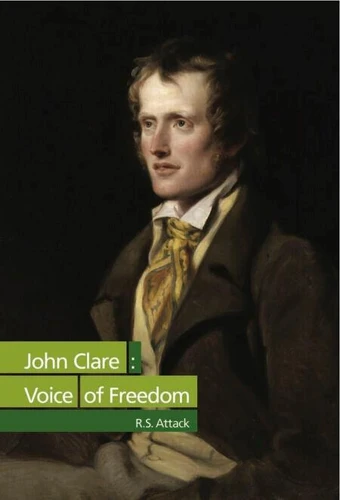
John Clare. Voice of Freedom
Par :Formats :
Disponible dans votre compte client Decitre ou Furet du Nord dès validation de votre commande. Le format PDF est :
- Compatible avec une lecture sur My Vivlio (smartphone, tablette, ordinateur)
- Compatible avec une lecture sur liseuses Vivlio
- Pour les liseuses autres que Vivlio, vous devez utiliser le logiciel Adobe Digital Edition. Non compatible avec la lecture sur les liseuses Kindle, Remarkable et Sony
 , qui est-ce ?
Notre partenaire de plateforme de lecture numérique où vous retrouverez l'ensemble de vos ebooks gratuitement
Pour en savoir plus sur nos ebooks, consultez notre aide en ligne ici
C'est si simple ! Lisez votre ebook avec l'app Vivlio sur votre tablette, mobile ou ordinateur :

- Nombre de pages298
- FormatPDF
- ISBN978-0-85683-329-8
- EAN9780856833298
- Date de parution08/08/2012
- Protection num.Digital Watermarking
- Taille349 Ko
- Infos supplémentairespdf
- ÉditeurShepheard-Walwyn
Résumé
John Clare (1793-1864) was born at a time of great social upheaval, just months after the beheading of Louis XVI and the outbreak of war with France which was to last till the defeat of Napoleon at Waterloo in 1815. He also lived through the upheavals of the land enclosure movement and agricultural revolution which changed the face of the countryside and the way of life in rural England.
His father was a farm worker who managed to pay for his son's schooling, though this was cut short as conditions worsened, but at least Clare had by then learnt to read and write so he could continue his own education, reading whatever books he could lay his hands on.
At the age of sixteen he witnessed the social dislocation caused by the local enclosure Act and observed how the landscape was gradually transformed. Drawing on Clare's writing, this extensively researched study gives the modern reader an appreciation of the divisive effects of these policies. Structured chronologically, this exploration of John Clare's life highlights the socio-economic and environmental aspects of his observations and includes his reports on an insidious revolution taking place in the English countryside.
Parliament, dominated by landowners, authorised the enclosure of large tracts of common land by private acts without considering the effect on those who had enjoyed rights of use and pasturage for centuries. Land enclosures, and the improved agricultural techniques which this permitted, was important in increasing food production at a time when the population of England was growing rapidly. While additional work was initially provided for agricultural labourers in the fencing and walling needed, this was temporary.
The introduction of new, labour-saving machinery further reduced the opportunities for work. Insufficient attention, the author argues, has been given to the consequences.
At the age of sixteen he witnessed the social dislocation caused by the local enclosure Act and observed how the landscape was gradually transformed. Drawing on Clare's writing, this extensively researched study gives the modern reader an appreciation of the divisive effects of these policies. Structured chronologically, this exploration of John Clare's life highlights the socio-economic and environmental aspects of his observations and includes his reports on an insidious revolution taking place in the English countryside.
Parliament, dominated by landowners, authorised the enclosure of large tracts of common land by private acts without considering the effect on those who had enjoyed rights of use and pasturage for centuries. Land enclosures, and the improved agricultural techniques which this permitted, was important in increasing food production at a time when the population of England was growing rapidly. While additional work was initially provided for agricultural labourers in the fencing and walling needed, this was temporary.
The introduction of new, labour-saving machinery further reduced the opportunities for work. Insufficient attention, the author argues, has been given to the consequences.