
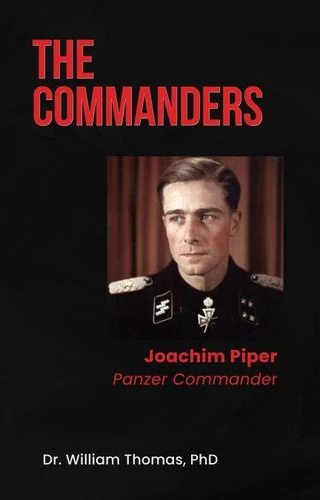
Joachim Piper Panzer Commander
Par :Formats :
Disponible dans votre compte client Decitre ou Furet du Nord dès validation de votre commande. Le format ePub est :
- Compatible avec une lecture sur My Vivlio (smartphone, tablette, ordinateur)
- Compatible avec une lecture sur liseuses Vivlio
- Pour les liseuses autres que Vivlio, vous devez utiliser le logiciel Adobe Digital Edition. Non compatible avec la lecture sur les liseuses Kindle, Remarkable et Sony
 , qui est-ce ?
Notre partenaire de plateforme de lecture numérique où vous retrouverez l'ensemble de vos ebooks gratuitement
Pour en savoir plus sur nos ebooks, consultez notre aide en ligne ici
C'est si simple ! Lisez votre ebook avec l'app Vivlio sur votre tablette, mobile ou ordinateur :

- FormatePub
- ISBN8230270621
- EAN9798230270621
- Date de parution13/03/2025
- Protection num.pas de protection
- Infos supplémentairesepub
- ÉditeurIndependently Published
Résumé
Joachim Peiper is a polarizing figure in military history, mainly recognized for his leadership in the Waffen-SS during World War II. His importance extends beyond military tactics and engagements to include ethical dilemmas. Born in 1915 in Germany, he climbed the ranks of the Waffen-SS, gaining fame for his role in key battles, particularly the Battle of the Bulge. His military actions established a reputation marked by both strategic brilliance and controversial methods.
Peiper's conduct during the war has been the subject of extensive examination, especially due to his involvement in war crimes. Incidents like the Malmedy Massacre, in which Waffen-SS units killed civilians and prisoners, highlighted the brutality of his command and raised questions about the morality of his decisions in the context of total war, then again, the morality of the Dresden bombing or the firebombing of Japan have never received the same criticism.
During that same event, the German battle schedule to reach the River Meuse thus splitting the Allied front and capturing much needed supplies didn't accommodate any delays much less the collection and guarding of prisoners Their goal was to split the Allies, cause confusion and either negotiate an armistice or give German military and scientist time to bring online some of their more technically advanced weapons such as the V-2, Messerschmitt Me 262 and possibly a dirty nuclear bomb.
Further analysis comes from Peiper's post-war trial, which illustrates the complexities of guilt and the psychological toll of warfare. While some perceive Peiper as an adept military strategist, others view him as an expression of the more sinister elements of the Nazi regime. His murder after the war adds another layer of ambiguity to his historical portrayal, perpetuating debates about accountability for war crimes.
In retrospect, Joachim Peiper's historical significance is multi-dimensional, encompassing military strategy, ethical questions, and the ongoing conversation surrounding heroism and villainy during wartime. His life serves as a reminder of human behavior under extreme pressure, making him a vital subject for understanding the moral landscape of World War II.
Peiper's conduct during the war has been the subject of extensive examination, especially due to his involvement in war crimes. Incidents like the Malmedy Massacre, in which Waffen-SS units killed civilians and prisoners, highlighted the brutality of his command and raised questions about the morality of his decisions in the context of total war, then again, the morality of the Dresden bombing or the firebombing of Japan have never received the same criticism.
During that same event, the German battle schedule to reach the River Meuse thus splitting the Allied front and capturing much needed supplies didn't accommodate any delays much less the collection and guarding of prisoners Their goal was to split the Allies, cause confusion and either negotiate an armistice or give German military and scientist time to bring online some of their more technically advanced weapons such as the V-2, Messerschmitt Me 262 and possibly a dirty nuclear bomb.
Further analysis comes from Peiper's post-war trial, which illustrates the complexities of guilt and the psychological toll of warfare. While some perceive Peiper as an adept military strategist, others view him as an expression of the more sinister elements of the Nazi regime. His murder after the war adds another layer of ambiguity to his historical portrayal, perpetuating debates about accountability for war crimes.
In retrospect, Joachim Peiper's historical significance is multi-dimensional, encompassing military strategy, ethical questions, and the ongoing conversation surrounding heroism and villainy during wartime. His life serves as a reminder of human behavior under extreme pressure, making him a vital subject for understanding the moral landscape of World War II.