SOLDES
Jusqu'à -70% sur une sélection d'articles*

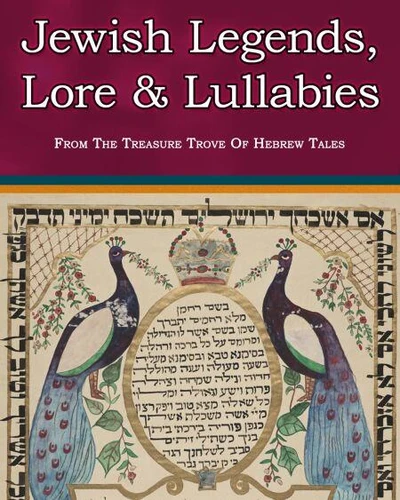
Jewish Legends, Lore and Lullabies From The Treasure Trove Of Hebrew Tales
Par :Formats :
Disponible dans votre compte client Decitre ou Furet du Nord dès validation de votre commande. Le format ePub est :
- Compatible avec une lecture sur My Vivlio (smartphone, tablette, ordinateur)
- Compatible avec une lecture sur liseuses Vivlio
- Pour les liseuses autres que Vivlio, vous devez utiliser le logiciel Adobe Digital Edition. Non compatible avec la lecture sur les liseuses Kindle, Remarkable et Sony
 , qui est-ce ?
Notre partenaire de plateforme de lecture numérique où vous retrouverez l'ensemble de vos ebooks gratuitement
Pour en savoir plus sur nos ebooks, consultez notre aide en ligne ici
C'est si simple ! Lisez votre ebook avec l'app Vivlio sur votre tablette, mobile ou ordinateur :

- FormatePub
- ISBN978-1-4661-0129-6
- EAN9781466101296
- Date de parution16/02/2012
- Protection num.pas de protection
- Infos supplémentairesepub
- ÉditeurWild Bohr Press
Résumé
Each and every culture lives and breathes stories to remember the past, to transmit its knowledge and wisdom to future generations. And, as Eli Wiesel once said, no other people have such a desire to remember like the Jews. The Hebrew Bible, without even mentioning its philosophical and metaphysical implications can simply be understood as a compilation of the greatest stories ever written - stories, that have inspired people all over the world up to this day.
Whether it is the story of Adam and Eve, Cain and Abel, Noah and the flood, Joseph and his brothers or Moses in the desert, these narratives have become known far beyond the Hebrew culture where they originated. And yet, they are only the tip of the ice-berg. This culture has a story for each situation, each week and hour, and they don't just contradict each other sporadically, but it's as if the narratives themselves are in constant disagreement with each other, always striving to bring up alternative viewpoints, which even in the most orthodox texts sometimes borders on the heretic, as in the infamous bible commentary which says that Moses had the "face of a murderer".
Nowadays, modern people are mainly interested in stories for their entertainment value but a good story can do a lot more than just entertain. As mentioned above, a story is a container of consciousness, transferring the spirit of times through the generations. Therefore, it can also be described as an educational device. In the Western world, Aesop's fables come to mind when thinking about educational narratives and are often quickly disregarded by modern readers for their linear morality and preachiness.
But when we go to the Middle East we find very different kinds of stories that are not linear at all, which are almost always ambiguous and often confusing for Western readers. In this respect, the Jewish stories are a lot closer to those found in, let's say, Arabian Nights than to the highly didactical narratives of classical antiquity, for example. The following stories have been taken from various Hebrew sources and were rewritten by the authors to make the riches of Hebrew storytelling more accessible for today's readers.
The selection of materials ranges from Midrashim (Bible commentaries and alternative narratives) to historical tales of figures such as Rabban Yohanan Ben Zakai to popular parables and allegories.
Whether it is the story of Adam and Eve, Cain and Abel, Noah and the flood, Joseph and his brothers or Moses in the desert, these narratives have become known far beyond the Hebrew culture where they originated. And yet, they are only the tip of the ice-berg. This culture has a story for each situation, each week and hour, and they don't just contradict each other sporadically, but it's as if the narratives themselves are in constant disagreement with each other, always striving to bring up alternative viewpoints, which even in the most orthodox texts sometimes borders on the heretic, as in the infamous bible commentary which says that Moses had the "face of a murderer".
Nowadays, modern people are mainly interested in stories for their entertainment value but a good story can do a lot more than just entertain. As mentioned above, a story is a container of consciousness, transferring the spirit of times through the generations. Therefore, it can also be described as an educational device. In the Western world, Aesop's fables come to mind when thinking about educational narratives and are often quickly disregarded by modern readers for their linear morality and preachiness.
But when we go to the Middle East we find very different kinds of stories that are not linear at all, which are almost always ambiguous and often confusing for Western readers. In this respect, the Jewish stories are a lot closer to those found in, let's say, Arabian Nights than to the highly didactical narratives of classical antiquity, for example. The following stories have been taken from various Hebrew sources and were rewritten by the authors to make the riches of Hebrew storytelling more accessible for today's readers.
The selection of materials ranges from Midrashim (Bible commentaries and alternative narratives) to historical tales of figures such as Rabban Yohanan Ben Zakai to popular parables and allegories.