
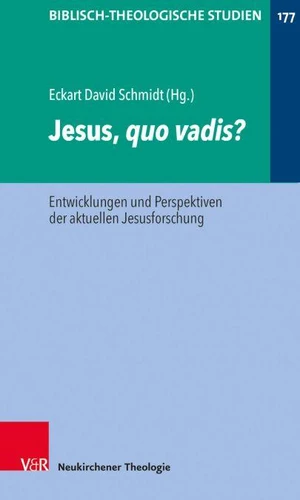



Dr. theol. Eckart David Schmidt ist Habilitand für Neues Testament an der Johannes Gutenberg-Universität Mainz.
Gerd Theißen ist Professor Emeritus für Neutestamentliche Theologie an der Universität Heidelberg.
Dr. theol. Eckart David Schmidt ist Habilitand für Neues Testament an der Johannes Gutenberg-Universität Mainz.
Dr. Ruth Conrad ist Professorin für Praktische Theologie an der Humboldt-Universität zu Berlin.
Professor Dr.
Hanna Roose ist Leiterin des Instituts Ev. Theologie / Religionspädagogik und Professorin für Bibelwissenschaften und Religionspädagogik an der Universität Lüneburg. Dr. Jörg Frey ist Professor für Neutestamentliche Wissenschaft mit Schwerpunkten Antikes Judentum und Hermeneutik an der Universität Zürich und Research Associate der University of the Free State, Bloemfontein, Südafrika. Janowski, Bernd, Prof.
em. Dr. theol., geb. 1943, Studium der Evangelischen Theologie, Altorientalistik und Ägyptologie in Tübingen, Promotion 1980, Habilitation 1984. Nach Professuren in Hamburg und Heidelberg, seit 1995 Professor für Altes Testament in Tübingen. Seit 1996 Ordentliches Mitglied der Heidelberger Akademie der Wissenschaften. Er ist seit 2011 emeritiert. Mitherausgeber der RGG 4. Aufl. sowie der Texte aus der Umwelt des Alten Testaments.
Neue Folge (TUAT. NF). Forschungsschwerpunkte: Theologie und Anthropologie des Alten Testaments, Religionsgeschichte Israels, Psalmen. Wichtige Veröffentlichungen: Konfliktgespräche mit Gott. Eine Anthropologie der Psalmen, Göttingen 5. Aufl. 2019; Anthropologie des Alten Testaments. Grundfragen - Kontexte - Themenfelder, Tübingen 2019; Ein Gott, der straft und tötet? Zwölf Fragen zum Gottesbild des Alten Testaments, Göttingen 4.
Aufl. 2020. Dr. theol. Friedhelm Hartenstein ist Professor für Altes Testament und Altorientalische Religionsgeschichte an der Universität München. Matthias Konradt ist Professor für Neutestamentliche Theologie an der Universität Heidelberg.
Hanna Roose ist Leiterin des Instituts Ev. Theologie / Religionspädagogik und Professorin für Bibelwissenschaften und Religionspädagogik an der Universität Lüneburg. Dr. Jörg Frey ist Professor für Neutestamentliche Wissenschaft mit Schwerpunkten Antikes Judentum und Hermeneutik an der Universität Zürich und Research Associate der University of the Free State, Bloemfontein, Südafrika. Janowski, Bernd, Prof.
em. Dr. theol., geb. 1943, Studium der Evangelischen Theologie, Altorientalistik und Ägyptologie in Tübingen, Promotion 1980, Habilitation 1984. Nach Professuren in Hamburg und Heidelberg, seit 1995 Professor für Altes Testament in Tübingen. Seit 1996 Ordentliches Mitglied der Heidelberger Akademie der Wissenschaften. Er ist seit 2011 emeritiert. Mitherausgeber der RGG 4. Aufl. sowie der Texte aus der Umwelt des Alten Testaments.
Neue Folge (TUAT. NF). Forschungsschwerpunkte: Theologie und Anthropologie des Alten Testaments, Religionsgeschichte Israels, Psalmen. Wichtige Veröffentlichungen: Konfliktgespräche mit Gott. Eine Anthropologie der Psalmen, Göttingen 5. Aufl. 2019; Anthropologie des Alten Testaments. Grundfragen - Kontexte - Themenfelder, Tübingen 2019; Ein Gott, der straft und tötet? Zwölf Fragen zum Gottesbild des Alten Testaments, Göttingen 4.
Aufl. 2020. Dr. theol. Friedhelm Hartenstein ist Professor für Altes Testament und Altorientalische Religionsgeschichte an der Universität München. Matthias Konradt ist Professor für Neutestamentliche Theologie an der Universität Heidelberg.