JERUSALEM
Par :Formats :
Disponible dans votre compte client Decitre ou Furet du Nord dès validation de votre commande. Le format ePub est :
- Compatible avec une lecture sur My Vivlio (smartphone, tablette, ordinateur)
- Compatible avec une lecture sur liseuses Vivlio
- Pour les liseuses autres que Vivlio, vous devez utiliser le logiciel Adobe Digital Edition. Non compatible avec la lecture sur les liseuses Kindle, Remarkable et Sony
 , qui est-ce ?
Notre partenaire de plateforme de lecture numérique où vous retrouverez l'ensemble de vos ebooks gratuitement
Pour en savoir plus sur nos ebooks, consultez notre aide en ligne ici
C'est si simple ! Lisez votre ebook avec l'app Vivlio sur votre tablette, mobile ou ordinateur :

- Nombre de pages5
- FormatePub
- ISBN859-65--4776323-9
- EAN8596547763239
- Date de parution24/12/2023
- Protection num.Digital Watermarking
- Taille11 Mo
- Infos supplémentairesepub
- ÉditeurDIGICAT
Résumé
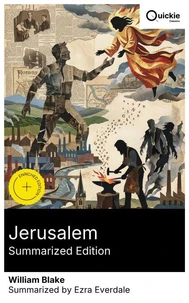
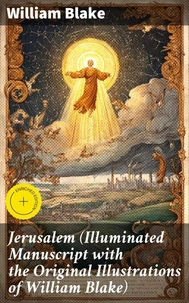
In "Jerusalem, " William Blake embarks on an ambitious exploration of spiritual, social, and political themes, intricately weaving his profound visions into a complex tapestry of poetry and art. Written during the late 18th century, this epic poem serves as a culmination of Blake's lifelong quest for a visionary perspective that transcends the material world. Incorporating a unique blend of mystical allegory and rich imagery, Blake critiques the urbanization and industrialization of his time, juxtaposing the ideal of a spiritual Jerusalem with the harsh realities of contemporary society.
The poem's distinctive style, characterized by rhythmic meter and lyrical intensity, positions it firmly within the Romantic movement, while also challenging the boundaries of traditional poetry through its innovative use of visual art and illuminated printing. William Blake, an enigmatic figure considered both a poet and a painter, drew from his own experiences of spiritual revelation and historical tumult to craft "Jerusalem." Living through the tumultuous shifts of the Industrial Revolution, Blake's work often reflects his opposition to institutional religion and societal conventions.
His visionary experiences and deep-seated belief in the transformative power of creativity shaped his perspective, motivating him to depict a world where spiritual awakening and social justice coexist harmoniously. For readers seeking an intellectually stimulating and aesthetically enriching experience, "Jerusalem" offers a profound meditation on personal and collective redemption. Blake's unique synthesis of poetry and visual art invites contemplation, making this work essential reading for those interested in the intersections of spirituality, politics, and the human condition.
The poem's enduring relevance resonates today, encouraging readers to reflect upon their own roles in shaping a 'new Jerusalem' in the contemporary landscape.
The poem's distinctive style, characterized by rhythmic meter and lyrical intensity, positions it firmly within the Romantic movement, while also challenging the boundaries of traditional poetry through its innovative use of visual art and illuminated printing. William Blake, an enigmatic figure considered both a poet and a painter, drew from his own experiences of spiritual revelation and historical tumult to craft "Jerusalem." Living through the tumultuous shifts of the Industrial Revolution, Blake's work often reflects his opposition to institutional religion and societal conventions.
His visionary experiences and deep-seated belief in the transformative power of creativity shaped his perspective, motivating him to depict a world where spiritual awakening and social justice coexist harmoniously. For readers seeking an intellectually stimulating and aesthetically enriching experience, "Jerusalem" offers a profound meditation on personal and collective redemption. Blake's unique synthesis of poetry and visual art invites contemplation, making this work essential reading for those interested in the intersections of spirituality, politics, and the human condition.
The poem's enduring relevance resonates today, encouraging readers to reflect upon their own roles in shaping a 'new Jerusalem' in the contemporary landscape.