SOLDES
Jusqu'à -70% sur une sélection d'articles*

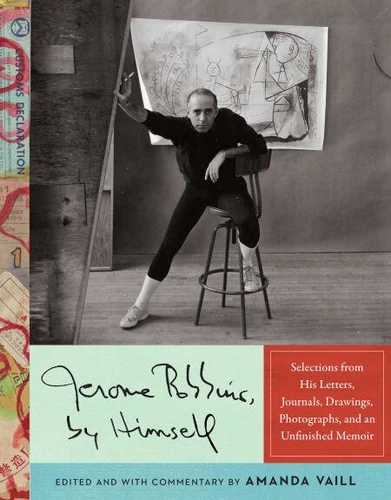
Jerome Robbins, by Himself. Selections from His Letters, Journals, Drawings, Photographs, and an Unfinished Memoir
Par : ,Formats :
Disponible dans votre compte client Decitre ou Furet du Nord dès validation de votre commande. Le format ePub protégé est :
- Compatible avec une lecture sur My Vivlio (smartphone, tablette, ordinateur)
- Compatible avec une lecture sur liseuses Vivlio
- Pour les liseuses autres que Vivlio, vous devez utiliser le logiciel Adobe Digital Edition. Non compatible avec la lecture sur les liseuses Kindle, Remarkable et Sony
- Non compatible avec un achat hors France métropolitaine
 , qui est-ce ?
Notre partenaire de plateforme de lecture numérique où vous retrouverez l'ensemble de vos ebooks gratuitement
Pour en savoir plus sur nos ebooks, consultez notre aide en ligne ici
C'est si simple ! Lisez votre ebook avec l'app Vivlio sur votre tablette, mobile ou ordinateur :

- Nombre de pages448
- FormatePub
- ISBN978-0-451-49467-2
- EAN9780451494672
- Date de parution01/10/2019
- Protection num.Adobe DRM
- Taille61 Mo
- Infos supplémentairesepub
- ÉditeurKnopf
Résumé
The titanic choreographer, creator of memorable ballets, master of Broadway musicals, legendary show doctor and director, now revealed in his own words--the closest we will get to a memoir/autobiography--from his voluminous letters, journals, notes, diaries, never before published. Edited, and with commentary by Amanda Vaill, author of Robbins's biography, Somewhere, 2006 ("I can't imagine a better book about Robbins ever being written"--Terry Teachout, chief drama critic, The Wall Street Journal).
He was famous for reinventing the Broadway musical, creating a vernacular American ballet, pushing the art form to new boundaries where it had never gone before, integrating dance seamlessly with character, story and music, and as Associate Artistic Director, Ballet Master, and Co-Artistic Director, with George Balanchine, shaping the New York City Ballet with daring and brio for more than five decades through his often startling choreography in ballet's classical idiom.
He was known as the king of Broadway, the most sought-after director-choreographer and show doctor who gave shape to On the Town (1944), Call Me Madam (1950), The King and I (1951), Wonderful Town (1953), Peter Pan (1954), The Pajama Game (1954), Silk Stockings (1955), West Side Story (1957), Gypsy (1959), A Funny Thing Happened on the Way to the Forum (1962), Funny Girl (1964), Fiddler on the Roof (1964), and many other classic musicals, winning four Tony Awards, two Oscars, and an Emmy.
He shocked and betrayed those he loved and worked with by naming names to the House Un-American Activities Committee. ("I betrayed my manhood, my Jewishness, my parents, my sister, " he wrote in a diary. "I can't undo it.") Now, Amanda Vaill, Jerome Robbins biographer and authority, drawing on the vast and closely held Robbins archives, has put together a selection of his writings, giving us a sense of his extraordinary range as a thinker and artist, as well as a surprising and revealing glimpse into the mind and heart of this towering cultural giant.
Interspersed throughout, his correspondence with George Balanchine, Leonard Bernstein, Aaron Copland, Robert Graves, Lincoln Kirstein, Arthur Laurents, Tanaquil Le Clercq (the fourth of Balanchine's four wives, with whom Robbins was also in love), Laurence Olivier, Stephen Sondheim, et al.
He was famous for reinventing the Broadway musical, creating a vernacular American ballet, pushing the art form to new boundaries where it had never gone before, integrating dance seamlessly with character, story and music, and as Associate Artistic Director, Ballet Master, and Co-Artistic Director, with George Balanchine, shaping the New York City Ballet with daring and brio for more than five decades through his often startling choreography in ballet's classical idiom.
He was known as the king of Broadway, the most sought-after director-choreographer and show doctor who gave shape to On the Town (1944), Call Me Madam (1950), The King and I (1951), Wonderful Town (1953), Peter Pan (1954), The Pajama Game (1954), Silk Stockings (1955), West Side Story (1957), Gypsy (1959), A Funny Thing Happened on the Way to the Forum (1962), Funny Girl (1964), Fiddler on the Roof (1964), and many other classic musicals, winning four Tony Awards, two Oscars, and an Emmy.
He shocked and betrayed those he loved and worked with by naming names to the House Un-American Activities Committee. ("I betrayed my manhood, my Jewishness, my parents, my sister, " he wrote in a diary. "I can't undo it.") Now, Amanda Vaill, Jerome Robbins biographer and authority, drawing on the vast and closely held Robbins archives, has put together a selection of his writings, giving us a sense of his extraordinary range as a thinker and artist, as well as a surprising and revealing glimpse into the mind and heart of this towering cultural giant.
Interspersed throughout, his correspondence with George Balanchine, Leonard Bernstein, Aaron Copland, Robert Graves, Lincoln Kirstein, Arthur Laurents, Tanaquil Le Clercq (the fourth of Balanchine's four wives, with whom Robbins was also in love), Laurence Olivier, Stephen Sondheim, et al.