
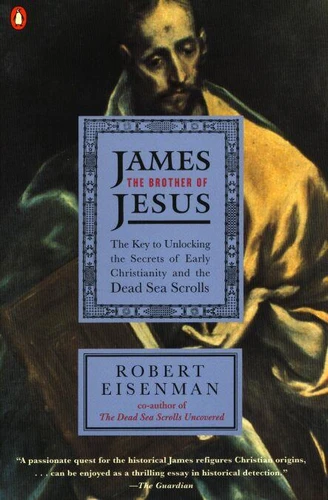
James The Brother Of Jesus
Par :Formats :
Disponible dans votre compte client Decitre ou Furet du Nord dès validation de votre commande. Le format ePub protégé est :
- Compatible avec une lecture sur My Vivlio (smartphone, tablette, ordinateur)
- Compatible avec une lecture sur liseuses Vivlio
- Pour les liseuses autres que Vivlio, vous devez utiliser le logiciel Adobe Digital Edition. Non compatible avec la lecture sur les liseuses Kindle, Remarkable et Sony
- Non compatible avec un achat hors France métropolitaine
 , qui est-ce ?
Notre partenaire de plateforme de lecture numérique où vous retrouverez l'ensemble de vos ebooks gratuitement
Pour en savoir plus sur nos ebooks, consultez notre aide en ligne ici
C'est si simple ! Lisez votre ebook avec l'app Vivlio sur votre tablette, mobile ou ordinateur :

- Nombre de pages1136
- FormatePub
- ISBN1-101-12744-9
- EAN9781101127445
- Date de parution01/03/1998
- Protection num.Adobe DRM
- Taille5 Mo
- Infos supplémentairesepub
- ÉditeurPenguin Books
Résumé
"A passionate quest for the historical James refigures Christian origins, . can be enjoyed as a thrilling essay in historical detection." -The GuardianJames was a vegetarian, wore only linen clothing, bathed daily at dawn in cold water, and was a life-long Nazirite. In this profound and provocative work of scholarly detection, eminent biblical scholar Robert Eisenman introduces a startling theory about the identity of James-the brother of Jesus, who was almost entirely marginalized in the New Testament.
Drawing on long-overlooked early Church texts and the Dead Sea Scrolls, Eisenman reveals in this groundbreaking exploration that James, not Peter, was the real successor to the movement we now call "Christianity." In an argument with enormous implications, Eisenman identifies Paul as deeply compromised by Roman contacts. James is presented as not simply the leader of Christianity of his day, but the popular Jewish leader of his time, whose death triggered the Uprising against Rome-a fact that creative rewriting of early Church documents has obscured.
Eisenman reveals that characters such as "Judas Iscariot" and "the Apostle James" did not exist as such. In delineating the deliberate falsifications in New Testament dcouments, Eisenman shows how-as James was written out-anti-Semitism was written in. By rescuing James from the oblivion into which he was cast, the final conclusion of James the Brother of Jesus is, in the words of The Jerusalem Post, "apocalyptic" -who and whatever James was, so was Jesus.
Drawing on long-overlooked early Church texts and the Dead Sea Scrolls, Eisenman reveals in this groundbreaking exploration that James, not Peter, was the real successor to the movement we now call "Christianity." In an argument with enormous implications, Eisenman identifies Paul as deeply compromised by Roman contacts. James is presented as not simply the leader of Christianity of his day, but the popular Jewish leader of his time, whose death triggered the Uprising against Rome-a fact that creative rewriting of early Church documents has obscured.
Eisenman reveals that characters such as "Judas Iscariot" and "the Apostle James" did not exist as such. In delineating the deliberate falsifications in New Testament dcouments, Eisenman shows how-as James was written out-anti-Semitism was written in. By rescuing James from the oblivion into which he was cast, the final conclusion of James the Brother of Jesus is, in the words of The Jerusalem Post, "apocalyptic" -who and whatever James was, so was Jesus.