SOLDES
Jusqu'à -70% sur une sélection d'articles*
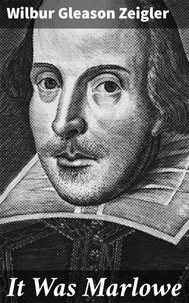
It Was Marlowe. A Story of the Secret of Three Centuries
Par :Formats :
Disponible dans votre compte client Decitre ou Furet du Nord dès validation de votre commande. Le format ePub est :
- Compatible avec une lecture sur My Vivlio (smartphone, tablette, ordinateur)
- Compatible avec une lecture sur liseuses Vivlio
- Pour les liseuses autres que Vivlio, vous devez utiliser le logiciel Adobe Digital Edition. Non compatible avec la lecture sur les liseuses Kindle, Remarkable et Sony
 , qui est-ce ?
Notre partenaire de plateforme de lecture numérique où vous retrouverez l'ensemble de vos ebooks gratuitement
Pour en savoir plus sur nos ebooks, consultez notre aide en ligne ici
C'est si simple ! Lisez votre ebook avec l'app Vivlio sur votre tablette, mobile ou ordinateur :

- Nombre de pages178
- FormatePub
- ISBN859-65--4701718-9
- EAN8596547017189
- Date de parution29/05/2022
- Protection num.Digital Watermarking
- Taille784 Ko
- Infos supplémentairesepub
- ÉditeurDIGICAT
Résumé
In "It Was Marlowe, " Wilbur Gleason Zeigler delves into the intricate tapestry of Elizabethan literature, challenging the widely accepted narratives surrounding Christopher Marlowe's life and work. The book adopts a literary-historical approach, seamlessly weaving together biographical details, textual analysis, and contemporary viewpoints to re-evaluate Marlowe's influence on subsequent playwrights, particularly William Shakespeare.
Zeigler's prose is both accessible and erudite, infused with a passion for the subject that invites readers to reconsider the often romanticized myths surrounding Marlowe's dramatic legacy and its socio-political implications in Renaissance England. Wilbur Gleason Zeigler, a prominent scholar in Renaissance literature, draws upon decades of research and teaching experience that illuminate this complex period in English history.
His passion for the dramatic arts and their societal relevance is reflected in his careful examination of Marlowe's works, as well as the broader context of the Elizabethan theater. Zeigler's extensive academic background provides him with a unique lens through which he interprets Marlowe's texts, ultimately offering new insights into the playwright's motivations and his radical perspectives. "It Was Marlowe" is a must-read for anyone interested in Elizabethan literature, theater history, or the fascinating figure of Christopher Marlowe himself.
Zeigler's meticulous analysis and insightful commentary not only enrich the reader's understanding of Marlowe's contributions but also evoke a deeper appreciation for the cultural dynamics of the period. Whether you are a seasoned scholar or a newcomer to Renaissance studies, this book promises to challenge preconceptions and ignite a renewed interest in one of theater's most enigmatic figures.
Zeigler's prose is both accessible and erudite, infused with a passion for the subject that invites readers to reconsider the often romanticized myths surrounding Marlowe's dramatic legacy and its socio-political implications in Renaissance England. Wilbur Gleason Zeigler, a prominent scholar in Renaissance literature, draws upon decades of research and teaching experience that illuminate this complex period in English history.
His passion for the dramatic arts and their societal relevance is reflected in his careful examination of Marlowe's works, as well as the broader context of the Elizabethan theater. Zeigler's extensive academic background provides him with a unique lens through which he interprets Marlowe's texts, ultimately offering new insights into the playwright's motivations and his radical perspectives. "It Was Marlowe" is a must-read for anyone interested in Elizabethan literature, theater history, or the fascinating figure of Christopher Marlowe himself.
Zeigler's meticulous analysis and insightful commentary not only enrich the reader's understanding of Marlowe's contributions but also evoke a deeper appreciation for the cultural dynamics of the period. Whether you are a seasoned scholar or a newcomer to Renaissance studies, this book promises to challenge preconceptions and ignite a renewed interest in one of theater's most enigmatic figures.