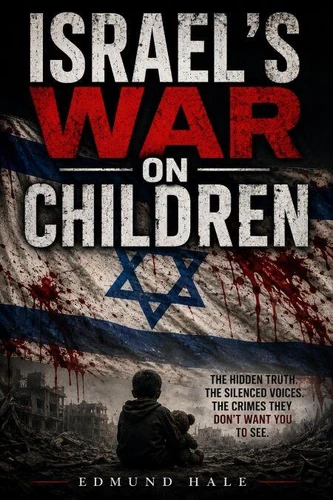
Israel's War on Children is a deeply researched examination of one of the most devastating humanitarian crises of the twenty-first century. Drawing on eyewitness testimony, medical accounts, investigative journalism, reports from the United Nations and humanitarian organisations, and the voices of survivors, this book explores the human cost of the war in Gaza by focusing on those who have borne its greatest burden: children.
Rather than reducing the conflict to politics or casualty statistics, the book tells the stories behind the headlines. It introduces readers to children such as Hind Rajab, Yaqeen Hammad, Adam al-Najjar, Ward Khalil, Eyad, Raider Ali Basharat, Hamza Amar Basharat, Saddam Rajab, Jad Jadala, and others whose lives were forever changed by war. Some lost their lives, while others survived with life-changing injuries.
Together, their stories reveal the human consequences of a conflict that has prompted intense international scrutiny. Drawing on reports from the United Nations, UNICEF, the World Health Organization, humanitarian organisations, journalists, medical professionals, and legal experts, the book examines hospitals pushed to collapse, overwhelmed doctors, families searching through rubble, children trapped beneath destroyed buildings, and aid workers struggling to reach those in desperate need.
It also explores the psychological trauma experienced by surviving children, the destruction of schools and communities, and the long road to recovery faced by families. The book critically examines Israel's military campaign following the Hamas attacks of 7 October 2023. It considers the humanitarian consequences of military operations, the destruction of civilian infrastructure, and the impact on hospitals, schools, and families.
It also examines Israel's stated military objectives and security rationale alongside the findings and concerns of humanitarian organisations, international investigators, and experts in international humanitarian law. Throughout, it distinguishes between documented facts, eyewitness testimony, official statements, and allegations that remain under investigation, allowing readers to consider the evidence for themselves.
Beyond the battlefield, Israel's War on Children explores how journalists documented the conflict under extraordinary danger, how competing narratives shaped international understanding, and how medical records, satellite imagery, eyewitness accounts, and independent investigations have become central to questions of accountability. It also examines the response of the United Nations, humanitarian agencies, international courts, governments, and citizens around the world.
At its heart, this is a book about memory. It argues that history should remember children as individuals rather than statistics and that every child deserves dignity, protection, and recognition regardless of nationality, ethnicity, or religion. It rejects antisemitism, Islamophobia, racism, and all forms of hatred, making clear that criticism of government policy must never become hostility toward an entire people or faith.
Written with compassion, careful research, and a commitment to historical accuracy, Israel's War on Children is not simply a chronicle of war. It is a record of lives interrupted, families forever changed, and children whose names deserve to be remembered. Above all, it is a reminder that behind every headline and every statistic is a child whose life mattered, whose future held promise, and whose story deserves to be told.
Israel's War on Children is a deeply researched examination of one of the most devastating humanitarian crises of the twenty-first century. Drawing on eyewitness testimony, medical accounts, investigative journalism, reports from the United Nations and humanitarian organisations, and the voices of survivors, this book explores the human cost of the war in Gaza by focusing on those who have borne its greatest burden: children.
Rather than reducing the conflict to politics or casualty statistics, the book tells the stories behind the headlines. It introduces readers to children such as Hind Rajab, Yaqeen Hammad, Adam al-Najjar, Ward Khalil, Eyad, Raider Ali Basharat, Hamza Amar Basharat, Saddam Rajab, Jad Jadala, and others whose lives were forever changed by war. Some lost their lives, while others survived with life-changing injuries.
Together, their stories reveal the human consequences of a conflict that has prompted intense international scrutiny. Drawing on reports from the United Nations, UNICEF, the World Health Organization, humanitarian organisations, journalists, medical professionals, and legal experts, the book examines hospitals pushed to collapse, overwhelmed doctors, families searching through rubble, children trapped beneath destroyed buildings, and aid workers struggling to reach those in desperate need.
It also explores the psychological trauma experienced by surviving children, the destruction of schools and communities, and the long road to recovery faced by families. The book critically examines Israel's military campaign following the Hamas attacks of 7 October 2023. It considers the humanitarian consequences of military operations, the destruction of civilian infrastructure, and the impact on hospitals, schools, and families.
It also examines Israel's stated military objectives and security rationale alongside the findings and concerns of humanitarian organisations, international investigators, and experts in international humanitarian law. Throughout, it distinguishes between documented facts, eyewitness testimony, official statements, and allegations that remain under investigation, allowing readers to consider the evidence for themselves.
Beyond the battlefield, Israel's War on Children explores how journalists documented the conflict under extraordinary danger, how competing narratives shaped international understanding, and how medical records, satellite imagery, eyewitness accounts, and independent investigations have become central to questions of accountability. It also examines the response of the United Nations, humanitarian agencies, international courts, governments, and citizens around the world.
At its heart, this is a book about memory. It argues that history should remember children as individuals rather than statistics and that every child deserves dignity, protection, and recognition regardless of nationality, ethnicity, or religion. It rejects antisemitism, Islamophobia, racism, and all forms of hatred, making clear that criticism of government policy must never become hostility toward an entire people or faith.
Written with compassion, careful research, and a commitment to historical accuracy, Israel's War on Children is not simply a chronicle of war. It is a record of lives interrupted, families forever changed, and children whose names deserve to be remembered. Above all, it is a reminder that behind every headline and every statistic is a child whose life mattered, whose future held promise, and whose story deserves to be told.


 , qui est-ce ?