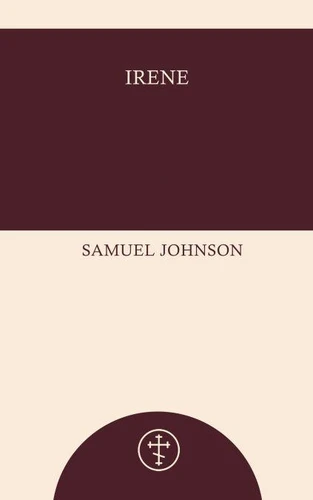
Irene
Par :Formats :
Disponible dans votre compte client Decitre ou Furet du Nord dès validation de votre commande. Le format ePub est :
- Compatible avec une lecture sur My Vivlio (smartphone, tablette, ordinateur)
- Compatible avec une lecture sur liseuses Vivlio
- Pour les liseuses autres que Vivlio, vous devez utiliser le logiciel Adobe Digital Edition. Non compatible avec la lecture sur les liseuses Kindle, Remarkable et Sony
 , qui est-ce ?
Notre partenaire de plateforme de lecture numérique où vous retrouverez l'ensemble de vos ebooks gratuitement
Pour en savoir plus sur nos ebooks, consultez notre aide en ligne ici
C'est si simple ! Lisez votre ebook avec l'app Vivlio sur votre tablette, mobile ou ordinateur :

- Nombre de pages68
- FormatePub
- EAN9786878956021
- Date de parution07/05/2026
- Protection num.Digital Watermarking
- Taille190 Ko
- Infos supplémentairesepub
- ÉditeurCLXBX
Résumé
Irene by Samuel Johnson is a classical tragedy that explores the collision between personal virtue and political power in the final days of the Byzantine Empire. Written in the mid-18th century, the play reflects Johnson's deep moral concerns and his admiration for order, reason, and ethical governance, presented through a dramatic narrative set in a world of imperial ambition and cultural conflict.
The story follows Irene, a noble and virtuous woman whose life becomes entangled in the court of Sultan Mahomet, the conqueror of Constantinople.
Captured during the Ottoman conquest, Irene is brought into a world of political tension, where loyalty, faith, and identity are constantly tested. Her presence at the court introduces emotional and moral complexity, as Mahomet himself is drawn into a struggle between desire, authority, and conscience. As the political situation grows increasingly unstable, characters are forced to confront the consequences of power, ambition, and moral compromise.
Irene's unwavering integrity stands in contrast to the corruption and volatility of the imperial court, highlighting Johnson's central concern with virtue under pressure. The tragedy builds toward a profound moral conclusion, emphasizing the cost of power when it is detached from ethical restraint. Samuel Johnson's Irene is notable for its elevated language, classical structure, and philosophical depth.
Though less frequently performed than other tragedies of its time, the play remains an important example of neoclassical drama and Johnson's literary ambition beyond his celebrated work in prose and criticism. Rich in historical atmosphere and moral reflection, Irene invites readers to consider timeless questions about justice, governance, and human dignity. It stands as a thoughtful meditation on the struggle between personal virtue and the demands of political authority. Ideal for students of literature, history, and drama, Irene offers a compelling glimpse into 18th-century tragic theatre and the enduring ethical concerns that shaped Samuel Johnson's worldview.
Captured during the Ottoman conquest, Irene is brought into a world of political tension, where loyalty, faith, and identity are constantly tested. Her presence at the court introduces emotional and moral complexity, as Mahomet himself is drawn into a struggle between desire, authority, and conscience. As the political situation grows increasingly unstable, characters are forced to confront the consequences of power, ambition, and moral compromise.
Irene's unwavering integrity stands in contrast to the corruption and volatility of the imperial court, highlighting Johnson's central concern with virtue under pressure. The tragedy builds toward a profound moral conclusion, emphasizing the cost of power when it is detached from ethical restraint. Samuel Johnson's Irene is notable for its elevated language, classical structure, and philosophical depth.
Though less frequently performed than other tragedies of its time, the play remains an important example of neoclassical drama and Johnson's literary ambition beyond his celebrated work in prose and criticism. Rich in historical atmosphere and moral reflection, Irene invites readers to consider timeless questions about justice, governance, and human dignity. It stands as a thoughtful meditation on the struggle between personal virtue and the demands of political authority. Ideal for students of literature, history, and drama, Irene offers a compelling glimpse into 18th-century tragic theatre and the enduring ethical concerns that shaped Samuel Johnson's worldview.
A propos de Samuel Johnson


1,99 €




0,99 €