SOLDES
Jusqu'à -70% sur une sélection d'articles*

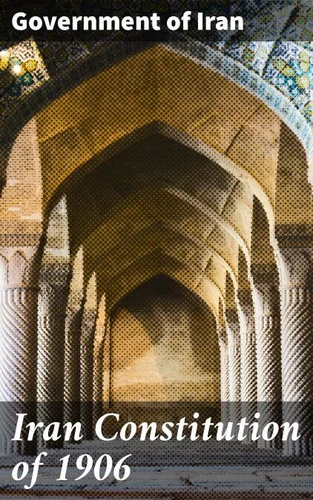
Iran Constitution of 1906. Enriched edition. An Insight into Iran's Constitutional Evolution
Par : , ,Formats :
Disponible dans votre compte client Decitre ou Furet du Nord dès validation de votre commande. Le format ePub est :
- Compatible avec une lecture sur My Vivlio (smartphone, tablette, ordinateur)
- Compatible avec une lecture sur liseuses Vivlio
- Pour les liseuses autres que Vivlio, vous devez utiliser le logiciel Adobe Digital Edition. Non compatible avec la lecture sur les liseuses Kindle, Remarkable et Sony
 , qui est-ce ?
Notre partenaire de plateforme de lecture numérique où vous retrouverez l'ensemble de vos ebooks gratuitement
Pour en savoir plus sur nos ebooks, consultez notre aide en ligne ici
C'est si simple ! Lisez votre ebook avec l'app Vivlio sur votre tablette, mobile ou ordinateur :

- Nombre de pages43
- FormatePub
- ISBN406-4-06-646375-5
- EAN4064066463755
- Date de parution10/04/2021
- Protection num.Digital Watermarking
- Taille1 Mo
- Infos supplémentairesepub
- ÉditeurGOOD PRESS
Résumé
The Iran Constitution of 1906, a pivotal document in the history of Iranian governance, encapsulates the aspirations for sovereignty and reform during a period of profound social and political upheaval. This foundational text emerged amidst the Constitutional Revolution, reflecting the burgeoning desire for democratic governance and the rule of law, as well as a response to the autocratic regime of the Qajar dynasty.
Its literary style is marked by a blend of classical Persian and modern political thought, illuminating the intellectual currents that influenced its creation, such as European Enlightenment ideals and indigenous political philosophy. The Constitution delineates the structure of government, incorporates civil rights, and sets the democratic framework that sought to curtail monarchical power while fostering civic engagement.
The authorship of this document was a collective endeavor by prominent Iranian intellectuals and revolutionaries, symbolizing a pivotal shift from absolute monarchy towards constitutional governance. Key figures involved in this movement, such as Ahmad Kasravi, were deeply influenced by their exposure to Western political ideologies and the injustices faced under autocratic rule. Their commitment to establishing a just society fueled the urgent call for constitutional reforms, ultimately leading to the creation of this historic document.
Recommended for scholars of Middle Eastern history, political science, and constitutional law, the Iran Constitution of 1906 offers a profound insight into the struggles for democracy in a region frequently characterized by authoritarian governance. This text not only provides a historical perspective but also serves as a source of inspiration for contemporary movements advocating for civil liberties and human rights in Iran and beyond. In this enriched edition, we have carefully created added value for your reading experience: - A succinct Introduction situates the work's timeless appeal and themes. - The Synopsis outlines the central plot, highlighting key developments without spoiling critical twists. - A detailed Historical Context immerses you in the era's events and influences that shaped the writing. - An Author Biography reveals milestones in the author's life, illuminating the personal insights behind the text. - A thorough Analysis dissects symbols, motifs, and character arcs to unearth underlying meanings. - Reflection questions prompt you to engage personally with the work's messages, connecting them to modern life. - Hand-picked Memorable Quotes shine a spotlight on moments of literary brilliance. - Interactive footnotes clarify unusual references, historical allusions, and archaic phrases for an effortless, more informed read.
Its literary style is marked by a blend of classical Persian and modern political thought, illuminating the intellectual currents that influenced its creation, such as European Enlightenment ideals and indigenous political philosophy. The Constitution delineates the structure of government, incorporates civil rights, and sets the democratic framework that sought to curtail monarchical power while fostering civic engagement.
The authorship of this document was a collective endeavor by prominent Iranian intellectuals and revolutionaries, symbolizing a pivotal shift from absolute monarchy towards constitutional governance. Key figures involved in this movement, such as Ahmad Kasravi, were deeply influenced by their exposure to Western political ideologies and the injustices faced under autocratic rule. Their commitment to establishing a just society fueled the urgent call for constitutional reforms, ultimately leading to the creation of this historic document.
Recommended for scholars of Middle Eastern history, political science, and constitutional law, the Iran Constitution of 1906 offers a profound insight into the struggles for democracy in a region frequently characterized by authoritarian governance. This text not only provides a historical perspective but also serves as a source of inspiration for contemporary movements advocating for civil liberties and human rights in Iran and beyond. In this enriched edition, we have carefully created added value for your reading experience: - A succinct Introduction situates the work's timeless appeal and themes. - The Synopsis outlines the central plot, highlighting key developments without spoiling critical twists. - A detailed Historical Context immerses you in the era's events and influences that shaped the writing. - An Author Biography reveals milestones in the author's life, illuminating the personal insights behind the text. - A thorough Analysis dissects symbols, motifs, and character arcs to unearth underlying meanings. - Reflection questions prompt you to engage personally with the work's messages, connecting them to modern life. - Hand-picked Memorable Quotes shine a spotlight on moments of literary brilliance. - Interactive footnotes clarify unusual references, historical allusions, and archaic phrases for an effortless, more informed read.