IoT Applications and Use Cases
Par : ,Formats :
Disponible dans votre compte client Decitre ou Furet du Nord dès validation de votre commande. Le format ePub est :
- Compatible avec une lecture sur My Vivlio (smartphone, tablette, ordinateur)
- Compatible avec une lecture sur liseuses Vivlio
- Pour les liseuses autres que Vivlio, vous devez utiliser le logiciel Adobe Digital Edition. Non compatible avec la lecture sur les liseuses Kindle, Remarkable et Sony
 , qui est-ce ?
Notre partenaire de plateforme de lecture numérique où vous retrouverez l'ensemble de vos ebooks gratuitement
Pour en savoir plus sur nos ebooks, consultez notre aide en ligne ici
C'est si simple ! Lisez votre ebook avec l'app Vivlio sur votre tablette, mobile ou ordinateur :

- FormatePub
- ISBN8230032540
- EAN9798230032540
- Date de parution22/01/2025
- Protection num.pas de protection
- Infos supplémentairesepub
- ÉditeurIndependently Published
Résumé
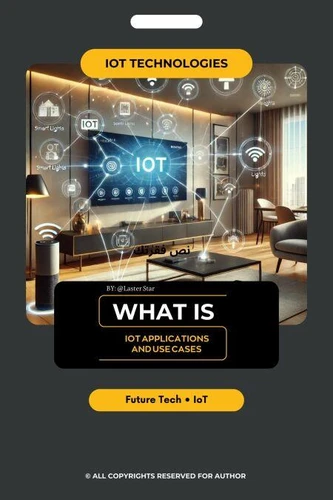
This Book IoT Technologies is trying to discuss meaning of The Internet of Things (IoT) is revolutionizing various industries by enabling smarter, more efficient, and interconnected systems. In smart home automation, IoT enhances comfort, convenience, and security through devices like smart thermostats, lighting systems, and security cameras, though challenges such as cybersecurity vulnerabilities, interoperability, and privacy concerns must be addressed.
In healthcare, IoT facilitates remote patient monitoring (RPM) and wearable devices, improving patient outcomes and reducing costs, while raising issues around data security, interoperability, and ethical considerations. In agriculture, IoT drives precision farming and crop management through sensor networks, drones, and automated irrigation systems, optimizing resource use and promoting sustainability, despite challenges like high implementation costs and technical expertise requirements.
In manufacturing, Industrial IoT (IIoT) transforms operations through smart factories, predictive maintenance, and real-time supply chain visibility, enhancing efficiency and decision-making, though cybersecurity risks and workforce readiness remain critical concerns. In smart cities, IoT solutions for traffic management and waste reduction improve urban infrastructure, reduce congestion, and enhance sustainability, but face hurdles such as data privacy, high costs, and the need for public-private partnerships.
In retail, IoT technologies like smart shelves and beacons enhance inventory management, personalize customer experiences, and improve operational efficiency, while addressing challenges like data privacy, integration complexity, and implementation costs. Across these sectors, IoT is driving innovation by integrating with emerging technologies such as artificial intelligence (AI), 5G, blockchain, and augmented reality (AR), enabling predictive analytics, real-time decision-making, and immersive experiences.
However, the adoption of IoT is not without challenges, including cybersecurity risks, high initial costs, interoperability issues, and ethical concerns related to data privacy and environmental impact. To fully realize the potential of IoT, stakeholders must prioritize human-centered design, robust security measures, sustainability, and collaboration across industries and governments. By addressing these challenges and embracing IoT's transformative capabilities, industries can create smarter, more efficient, and sustainable ecosystems that enhance quality of life and drive economic growth.
In healthcare, IoT facilitates remote patient monitoring (RPM) and wearable devices, improving patient outcomes and reducing costs, while raising issues around data security, interoperability, and ethical considerations. In agriculture, IoT drives precision farming and crop management through sensor networks, drones, and automated irrigation systems, optimizing resource use and promoting sustainability, despite challenges like high implementation costs and technical expertise requirements.
In manufacturing, Industrial IoT (IIoT) transforms operations through smart factories, predictive maintenance, and real-time supply chain visibility, enhancing efficiency and decision-making, though cybersecurity risks and workforce readiness remain critical concerns. In smart cities, IoT solutions for traffic management and waste reduction improve urban infrastructure, reduce congestion, and enhance sustainability, but face hurdles such as data privacy, high costs, and the need for public-private partnerships.
In retail, IoT technologies like smart shelves and beacons enhance inventory management, personalize customer experiences, and improve operational efficiency, while addressing challenges like data privacy, integration complexity, and implementation costs. Across these sectors, IoT is driving innovation by integrating with emerging technologies such as artificial intelligence (AI), 5G, blockchain, and augmented reality (AR), enabling predictive analytics, real-time decision-making, and immersive experiences.
However, the adoption of IoT is not without challenges, including cybersecurity risks, high initial costs, interoperability issues, and ethical concerns related to data privacy and environmental impact. To fully realize the potential of IoT, stakeholders must prioritize human-centered design, robust security measures, sustainability, and collaboration across industries and governments. By addressing these challenges and embracing IoT's transformative capabilities, industries can create smarter, more efficient, and sustainable ecosystems that enhance quality of life and drive economic growth.