SOLDES
Jusqu'à -70% sur une sélection d'articles*

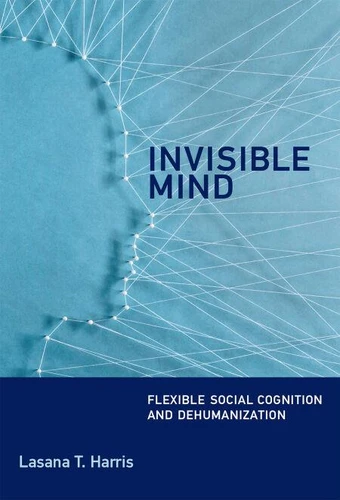
Invisible Mind. Flexible Social Cognition and Dehumanization
Par :Formats :
Disponible dans votre compte client Decitre ou Furet du Nord dès validation de votre commande. Le format ePub protégé est :
- Compatible avec une lecture sur My Vivlio (smartphone, tablette, ordinateur)
- Compatible avec une lecture sur liseuses Vivlio
- Pour les liseuses autres que Vivlio, vous devez utiliser le logiciel Adobe Digital Edition. Non compatible avec la lecture sur les liseuses Kindle, Remarkable et Sony
- Non compatible avec un achat hors France métropolitaine
 , qui est-ce ?
Notre partenaire de plateforme de lecture numérique où vous retrouverez l'ensemble de vos ebooks gratuitement
Pour en savoir plus sur nos ebooks, consultez notre aide en ligne ici
C'est si simple ! Lisez votre ebook avec l'app Vivlio sur votre tablette, mobile ou ordinateur :

- Nombre de pages240
- FormatePub
- ISBN978-0-262-33905-6
- EAN9780262339056
- Date de parution02/06/2017
- Protection num.Adobe DRM
- Taille557 Ko
- Infos supplémentairesepub
- ÉditeurThe MIT Press
Résumé
An interdisciplinary view of the evolution and consequences of flexible social cognition-the capacity to withhold the inference of mental states to other people. In Invisible Mind, Lasana Harris takes a social neuroscience approach to explaining the worst of human behavior. How can a person take part in racially motivated violence and then tenderly cradle a baby or lovingly pet a puppy? Harris argues that our social cognition-the ability to infer the mental states of another agent-is flexible.
That is, we can either engage or withhold social cognition. If we withhold social cognition, we dehumanize the other person. Integrating theory from a range of disciplines-social, developmental, and cognitive psychology, evolutionary anthropology, philosophy, economics, and law-with neuroscience data, Harris explores how and why we engage or withhold social cognition. He examines research in these different disciplines and describes biological processes that underlie flexible social cognition, including brain, genetic, hormonal, and physiological mechanisms.
After laying out the philosophical and theoretical terrain, Harris explores examples of social cognitive ability in nonhumans and explains the evolutionary staying power of this trait. He addresses two motives for social cognition-prediction and explanation-and reviews cases of anthropomorphism (extending social cognition to entities without mental states) and dehumanization (withholding it from people with mental states).
He discusses the relation of social cognition to the human/nonhuman distinction and to the evolution of sociality. He considers the importance of social context and, finally, he speculates about the implications of flexible social cognition in such arenas for human interaction as athletic competition and international disputes.
That is, we can either engage or withhold social cognition. If we withhold social cognition, we dehumanize the other person. Integrating theory from a range of disciplines-social, developmental, and cognitive psychology, evolutionary anthropology, philosophy, economics, and law-with neuroscience data, Harris explores how and why we engage or withhold social cognition. He examines research in these different disciplines and describes biological processes that underlie flexible social cognition, including brain, genetic, hormonal, and physiological mechanisms.
After laying out the philosophical and theoretical terrain, Harris explores examples of social cognitive ability in nonhumans and explains the evolutionary staying power of this trait. He addresses two motives for social cognition-prediction and explanation-and reviews cases of anthropomorphism (extending social cognition to entities without mental states) and dehumanization (withholding it from people with mental states).
He discusses the relation of social cognition to the human/nonhuman distinction and to the evolution of sociality. He considers the importance of social context and, finally, he speculates about the implications of flexible social cognition in such arenas for human interaction as athletic competition and international disputes.