Author
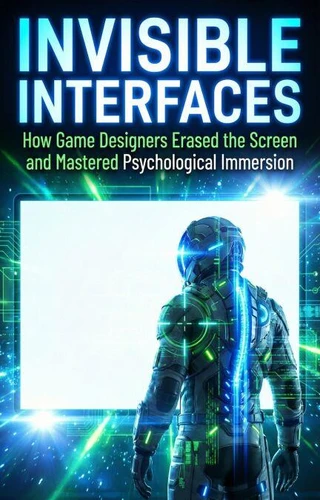
Invisible Interfaces. How Game Designers Erased the Screen and Mastered Psychological Immersion
Par :Formats :
Disponible dans votre compte client Decitre ou Furet du Nord dès validation de votre commande. Le format ePub est :
- Compatible avec une lecture sur My Vivlio (smartphone, tablette, ordinateur)
- Compatible avec une lecture sur liseuses Vivlio
- Pour les liseuses autres que Vivlio, vous devez utiliser le logiciel Adobe Digital Edition. Non compatible avec la lecture sur les liseuses Kindle, Remarkable et Sony
 , qui est-ce ?
Notre partenaire de plateforme de lecture numérique où vous retrouverez l'ensemble de vos ebooks gratuitement
Pour en savoir plus sur nos ebooks, consultez notre aide en ligne ici
C'est si simple ! Lisez votre ebook avec l'app Vivlio sur votre tablette, mobile ou ordinateur :

- Nombre de pages180
- FormatePub
- ISBN978-3-565-26635-7
- EAN9783565266357
- Date de parution23/02/2026
- Protection num.pas de protection
- Taille658 Ko
- Infos supplémentairesepub
- ÉditeurEmphaloz Publishing House
Résumé
In the early decades of video games, the screen was cluttered with information. Health bars, ammo counters, mini-maps, and flashing score multipliers constantly reminded the player that they were sitting on a couch holding a piece of plastic. But as gaming matured from simple arcade challenges into sprawling, narrative-driven epics, developers realized that traditional Heads-Up Displays (HUDs) were destroying the very immersion they were trying to build.
The holy grail of game design became making the interface disappear entirely. This fascinating deep-dive into the evolution of gaming interfaces explores the brilliant psychological tricks developers use to communicate vital information without breaking the fourth wall. The author traces the rise of "diegetic" interfaces-where the UI exists within the game world itself. You will learn how games like Dead Space integrated health bars directly into the protagonist's spinal armor, how racing simulators use audio cues instead of visual maps, and how modern titles use lighting and environmental design to unconsciously guide players through complex levels. Through interviews with legendary UI/UX designers, this book reveals the meticulous testing and psychological profiling required to build an interface that players never even notice.
Discover the invisible art of guiding human attention, and learn how the removal of a simple health bar revolutionized the way we experience digital worlds.
The holy grail of game design became making the interface disappear entirely. This fascinating deep-dive into the evolution of gaming interfaces explores the brilliant psychological tricks developers use to communicate vital information without breaking the fourth wall. The author traces the rise of "diegetic" interfaces-where the UI exists within the game world itself. You will learn how games like Dead Space integrated health bars directly into the protagonist's spinal armor, how racing simulators use audio cues instead of visual maps, and how modern titles use lighting and environmental design to unconsciously guide players through complex levels. Through interviews with legendary UI/UX designers, this book reveals the meticulous testing and psychological profiling required to build an interface that players never even notice.
Discover the invisible art of guiding human attention, and learn how the removal of a simple health bar revolutionized the way we experience digital worlds.