SOLDES
Jusqu'à -70% sur une sélection d'articles*

Nouveauté
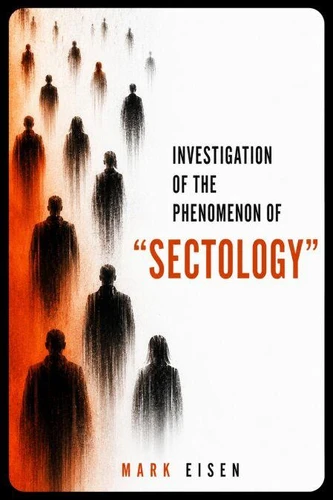
Investigation of the Phenomenon of “Sectology”
Par :Formats :
Disponible dans votre compte client Decitre ou Furet du Nord dès validation de votre commande. Le format ePub est :
- Compatible avec une lecture sur My Vivlio (smartphone, tablette, ordinateur)
- Compatible avec une lecture sur liseuses Vivlio
- Pour les liseuses autres que Vivlio, vous devez utiliser le logiciel Adobe Digital Edition. Non compatible avec la lecture sur les liseuses Kindle, Remarkable et Sony
 , qui est-ce ?
Notre partenaire de plateforme de lecture numérique où vous retrouverez l'ensemble de vos ebooks gratuitement
Pour en savoir plus sur nos ebooks, consultez notre aide en ligne ici
C'est si simple ! Lisez votre ebook avec l'app Vivlio sur votre tablette, mobile ou ordinateur :

- FormatePub
- ISBN8235519275
- EAN9798235519275
- Date de parution11/06/2026
- Protection num.pas de protection
- Infos supplémentairesepub
- ÉditeurIoakim Ioakim
Résumé
Investigating the Phenomenon of 'Sectology'" is a documentary investigation into how a single text can become a weapon and words can replace batons, handcuffs, and sentences. In the courtroom, a "textbook" lies on the judge's desk. It looks almost academic - hardcover, restrained typography, the confident tone of an "expert." But it is this book that becomes the trigger: it sets off a chain reaction in which ordinary people suddenly become a "threat, " families become "dysfunctional, " and faith becomes a reason for search, prohibition, and imprisonment.
This investigation is about the mechanics of dehumanization: how the label "cult" shuts down empathy and legalizes violence, and how pseudoscientific vocabulary begins to function as a legal argument. The author shows how "phantom" terms such as "totalitarian sect" appear and become established. These terms do not exist in law, but they prove to be stronger than the law because they are repeated in expert reports, media materials, and official lectures.
At the center of the book is the figure of Alexander Dvorkin and the anti-cult network associated with him (including RACIRS): their rhetoric, methods, and influence on public perception of religious minorities. Examples from the text of "Sectology" are used to analyze how dehumanizing constructs work. A separate thread in the book is "expertise as a verdict": how a circle of mutual responsibility is formed when statements from anti-cult literature are turned into "scientific sources, " then into expert opinions, and then into court decisions.
The real consequences are shown: social stigma, pressure on families, destruction of reputations, justification of forceful actions, and a gradual shift in the boundaries of what is acceptable-when persecution begins to seem like "normal prevention."This is a journalistic text about how society is taught to see people not as human beings, but as "adepts, " "zombies, " "trash, " and "objects of prevention." And about why repression often begins not with an order, but with a phrase printed in a "textbook" that too many people believe.
This investigation is about the mechanics of dehumanization: how the label "cult" shuts down empathy and legalizes violence, and how pseudoscientific vocabulary begins to function as a legal argument. The author shows how "phantom" terms such as "totalitarian sect" appear and become established. These terms do not exist in law, but they prove to be stronger than the law because they are repeated in expert reports, media materials, and official lectures.
At the center of the book is the figure of Alexander Dvorkin and the anti-cult network associated with him (including RACIRS): their rhetoric, methods, and influence on public perception of religious minorities. Examples from the text of "Sectology" are used to analyze how dehumanizing constructs work. A separate thread in the book is "expertise as a verdict": how a circle of mutual responsibility is formed when statements from anti-cult literature are turned into "scientific sources, " then into expert opinions, and then into court decisions.
The real consequences are shown: social stigma, pressure on families, destruction of reputations, justification of forceful actions, and a gradual shift in the boundaries of what is acceptable-when persecution begins to seem like "normal prevention."This is a journalistic text about how society is taught to see people not as human beings, but as "adepts, " "zombies, " "trash, " and "objects of prevention." And about why repression often begins not with an order, but with a phrase printed in a "textbook" that too many people believe.