
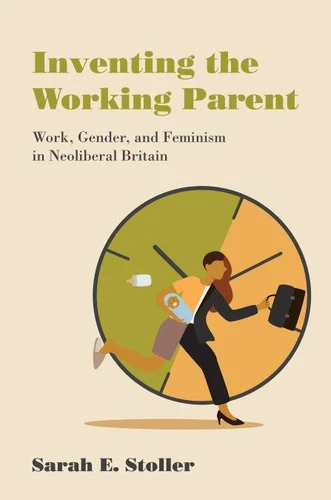
Inventing the Working Parent. Work, Gender, and Feminism in Neoliberal Britain
Par :Formats :
Disponible dans votre compte client Decitre ou Furet du Nord dès validation de votre commande. Le format ePub protégé est :
- Compatible avec une lecture sur My Vivlio (smartphone, tablette, ordinateur)
- Compatible avec une lecture sur liseuses Vivlio
- Pour les liseuses autres que Vivlio, vous devez utiliser le logiciel Adobe Digital Edition. Non compatible avec la lecture sur les liseuses Kindle, Remarkable et Sony
- Non compatible avec un achat hors France métropolitaine
 , qui est-ce ?
Notre partenaire de plateforme de lecture numérique où vous retrouverez l'ensemble de vos ebooks gratuitement
Pour en savoir plus sur nos ebooks, consultez notre aide en ligne ici
C'est si simple ! Lisez votre ebook avec l'app Vivlio sur votre tablette, mobile ou ordinateur :

- Nombre de pages304
- FormatePub
- ISBN978-0-262-37506-1
- EAN9780262375061
- Date de parution22/08/2023
- Protection num.Adobe DRM
- Taille1 Mo
- Infos supplémentairesepub
- ÉditeurThe MIT Press
Résumé
The first historical examination of working parenthood in the late twentieth century-and how the concepts of "family-friendly" work culture and "work-life balance" came to be. Since the 1980s, families across the developed West have lived through a revolution on a scale unprecedented since industrialization. With more mothers than ever before in paid work and the rise of the middle-class, dual-income household, we have entered a new era in the history of everyday life: the era of the working parent.
In Inventing the Working Parent, Sarah E. Stoller charts the politics that shaped the creation of the phenomenon of working parenthood in Britain as it arose out of a new culture of work. Stoller begins with the first sustained efforts by feminists to mobilize politically on behalf of working parents in the late 1970s and concludes in the context of an emerging national political agenda for working families with the rise of New Labour in the 1990s.
She explores how and why the notion of working parenthood emerged as a powerful new political claim and identity category and addresses how feminists used the concept of working parenthood to advocate for new organizational policies and practices. Lastly, Stoller shows how neoliberal capitalism under Margaret Thatcher and subsequent New Labour governments made a family's ability to survive on one income nearly impossible-with significant consequences for individual experience, the gendered division of labor, and intimate life.
In Inventing the Working Parent, Sarah E. Stoller charts the politics that shaped the creation of the phenomenon of working parenthood in Britain as it arose out of a new culture of work. Stoller begins with the first sustained efforts by feminists to mobilize politically on behalf of working parents in the late 1970s and concludes in the context of an emerging national political agenda for working families with the rise of New Labour in the 1990s.
She explores how and why the notion of working parenthood emerged as a powerful new political claim and identity category and addresses how feminists used the concept of working parenthood to advocate for new organizational policies and practices. Lastly, Stoller shows how neoliberal capitalism under Margaret Thatcher and subsequent New Labour governments made a family's ability to survive on one income nearly impossible-with significant consequences for individual experience, the gendered division of labor, and intimate life.