
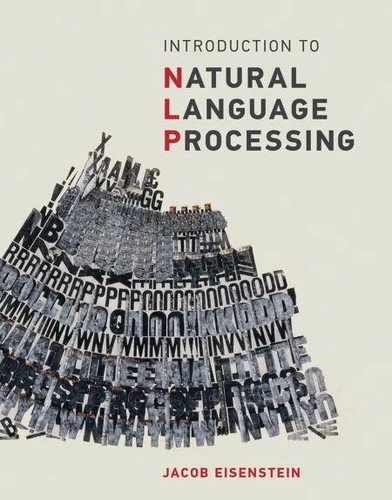
Introduction to Natural Language Processing
Par :Formats :
Disponible dans votre compte client Decitre ou Furet du Nord dès validation de votre commande. Le format Epub fixed layout protégé est :
- Compatible avec une lecture sur My Vivlio (smartphone, tablette, ordinateur)
- Compatible avec une lecture sur liseuses Vivlio
- Pour les liseuses autres que Vivlio, vous devez utiliser le logiciel Adobe Digital Edition. Non compatible avec la lecture sur les liseuses Kindle, Remarkable et Sony
- Non compatible avec un achat hors France métropolitaine
 , qui est-ce ?
Notre partenaire de plateforme de lecture numérique où vous retrouverez l'ensemble de vos ebooks gratuitement
Pour en savoir plus sur nos ebooks, consultez notre aide en ligne ici
C'est si simple ! Lisez votre ebook avec l'app Vivlio sur votre tablette, mobile ou ordinateur :

- Nombre de pages536
- FormatEpub fixed layout
- ISBN978-0-262-35457-8
- EAN9780262354578
- Date de parution01/10/2019
- Protection num.Adobe DRM
- Taille4 Mo
- Infos supplémentairesepub
- ÉditeurThe MIT Press
Résumé
A survey of computational methods for understanding, generating, and manipulating human language, which offers a synthesis of classical representations and algorithms with contemporary machine learning techniques. This textbook provides a technical perspective on natural language processing-methods for building computer software that understands, generates, and manipulates human language. It emphasizes contemporary data-driven approaches, focusing on techniques from supervised and unsupervised machine learning.
The first section establishes a foundation in machine learning by building a set of tools that will be used throughout the book and applying them to word-based textual analysis. The second section introduces structured representations of language, including sequences, trees, and graphs. The third section explores different approaches to the representation and analysis of linguistic meaning, ranging from formal logic to neural word embeddings.
The final section offers chapter-length treatments of three transformative applications of natural language processing: information extraction, machine translation, and text generation. End-of-chapter exercises include both paper-and-pencil analysis and software implementation. The text synthesizes and distills a broad and diverse research literature, linking contemporary machine learning techniques with the field's linguistic and computational foundations.
It is suitable for use in advanced undergraduate and graduate-level courses and as a reference for software engineers and data scientists. Readers should have a background in computer programming and college-level mathematics. After mastering the material presented, students will have the technical skill to build and analyze novel natural language processing systems and to understand the latest research in the field.
The first section establishes a foundation in machine learning by building a set of tools that will be used throughout the book and applying them to word-based textual analysis. The second section introduces structured representations of language, including sequences, trees, and graphs. The third section explores different approaches to the representation and analysis of linguistic meaning, ranging from formal logic to neural word embeddings.
The final section offers chapter-length treatments of three transformative applications of natural language processing: information extraction, machine translation, and text generation. End-of-chapter exercises include both paper-and-pencil analysis and software implementation. The text synthesizes and distills a broad and diverse research literature, linking contemporary machine learning techniques with the field's linguistic and computational foundations.
It is suitable for use in advanced undergraduate and graduate-level courses and as a reference for software engineers and data scientists. Readers should have a background in computer programming and college-level mathematics. After mastering the material presented, students will have the technical skill to build and analyze novel natural language processing systems and to understand the latest research in the field.