
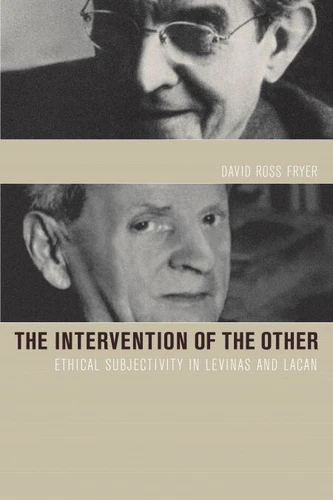
Intervention of the Other
Par :Formats :
Disponible dans votre compte client Decitre ou Furet du Nord dès validation de votre commande. Le format ePub protégé est :
- Compatible avec une lecture sur My Vivlio (smartphone, tablette, ordinateur)
- Compatible avec une lecture sur liseuses Vivlio
- Pour les liseuses autres que Vivlio, vous devez utiliser le logiciel Adobe Digital Edition. Non compatible avec la lecture sur les liseuses Kindle, Remarkable et Sony
- Non compatible avec un achat hors France métropolitaine
 , qui est-ce ?
Notre partenaire de plateforme de lecture numérique où vous retrouverez l'ensemble de vos ebooks gratuitement
Pour en savoir plus sur nos ebooks, consultez notre aide en ligne ici
C'est si simple ! Lisez votre ebook avec l'app Vivlio sur votre tablette, mobile ou ordinateur :

- Nombre de pages268
- FormatePub
- ISBN978-1-63542-134-7
- EAN9781635421347
- Date de parution06/10/2020
- Protection num.Adobe DRM
- Taille2 Mo
- Infos supplémentairesepub
- ÉditeurOther Press
Résumé
The Intervention of the Other deftly brings the thought of Emmanuel Levinas and Jacques Lacan into fruitful dialogue through a comparative analysis of these two seemingly disparate thinkers. Emmanuel Levinas, Lithuanian-born French phenomenologist of the nonphenomenon, and Jacques Lacan, controversial French psychoanalyst and (post)structuralist theorist of the Freudian Unconscious, lived and wrote in the same city, at the same time, among the same colleagues, often using the same language and the same sources, sometimes writing to the same audiencesóand yet they never wrote to or about one another.
Following Sartre, Levinas thought that Freud had fundamentally misunderstood the nature of consciousness when he posited the Unconscious as a second, but hidden, consciousness. Despite this suspicion of psychoanalysis, however, Levinasí own work celebrated a certain something that could not be contained by thought. For his part, Lacan was suspicious of philosophical ethics. He subscribed to a Freudian critique of ethics as pathogenic.
Nevertheless, he saw his own work as fundamentally about a kind of ethics, specifically an ethics concerned with how people live their lives in an already normative society. While the two never engaged with each otherís thought directly, Levinas and Lacan were interested in many of the same questions: What is the nature of the self? What is it to be a subject? Can the ethical be grounded in a post-foundationalist world?Through close textual analysis, David Ross Fryer shows how Levinas and Lacan offer two ways of positing the ethical subject in the post-humanist landscape of contemporary thought.
Following Sartre, Levinas thought that Freud had fundamentally misunderstood the nature of consciousness when he posited the Unconscious as a second, but hidden, consciousness. Despite this suspicion of psychoanalysis, however, Levinasí own work celebrated a certain something that could not be contained by thought. For his part, Lacan was suspicious of philosophical ethics. He subscribed to a Freudian critique of ethics as pathogenic.
Nevertheless, he saw his own work as fundamentally about a kind of ethics, specifically an ethics concerned with how people live their lives in an already normative society. While the two never engaged with each otherís thought directly, Levinas and Lacan were interested in many of the same questions: What is the nature of the self? What is it to be a subject? Can the ethical be grounded in a post-foundationalist world?Through close textual analysis, David Ross Fryer shows how Levinas and Lacan offer two ways of positing the ethical subject in the post-humanist landscape of contemporary thought.