
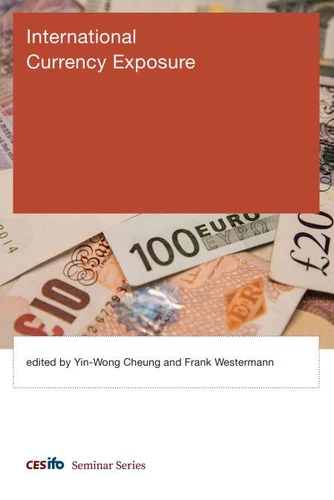
International Currency Exposure
Par : ,Formats :
Disponible dans votre compte client Decitre ou Furet du Nord dès validation de votre commande. Le format ePub protégé est :
- Compatible avec une lecture sur My Vivlio (smartphone, tablette, ordinateur)
- Compatible avec une lecture sur liseuses Vivlio
- Pour les liseuses autres que Vivlio, vous devez utiliser le logiciel Adobe Digital Edition. Non compatible avec la lecture sur les liseuses Kindle, Remarkable et Sony
- Non compatible avec un achat hors France métropolitaine
 , qui est-ce ?
Notre partenaire de plateforme de lecture numérique où vous retrouverez l'ensemble de vos ebooks gratuitement
Pour en savoir plus sur nos ebooks, consultez notre aide en ligne ici
C'est si simple ! Lisez votre ebook avec l'app Vivlio sur votre tablette, mobile ou ordinateur :

- Nombre de pages328
- FormatePub
- ISBN978-0-262-34093-9
- EAN9780262340939
- Date de parution14/07/2017
- Protection num.Adobe DRM
- Taille8 Mo
- Infos supplémentairesepub
- ÉditeurThe MIT Press
Résumé
Issues in debates about foreign currency exposure-the denomination of liabilities or assets in foreign currency. The foreign currency denomination of contracts in international transactions can lead to international currency exposure at the country level with important economic and policy implications. When debts are denominated in foreign currency and revenues in domestic currency, exchange rate fluctuations can result in balance sheet effects for countries with either net asset or liability positions.
Moreover, currency mismatch between assets and liabilities can be a cause for crises in developing and emerging economies. This book looks at the issues surrounding foreign currency exposure in today's increasingly integrated world economy. The contributors draw on cross-country as well as country-specific data. They consider international currency risk after the Swiss franc ended its one-sided peg with the euro, for example, and the foreign exchange positions of firms in Turkey and Russia.
Other contributors take macroeconomic perspectives, examining the potential effects of exchange rate realignment, the pressure to appreciate on countries with current account surpluses, and the currency exposure in international trade. Finally, contributors consider the issue from finance and political economy perspectives, addressing the phenomenon of the forward premium puzzle and discussing geopolitical aspects ascending currencies.
ContributorsFatih Altunok, Huseyin Aytug, Agustín S. Bénétrix, Jörg Breitung, Paul De Grauwe, Eiji Fujii, Peter Garber, Juann H. Hung, Signe Krogstrup, Philip R. Lane, Katja Mann, Arif Oduncu, Gunther Schnabl, Maria V. Sokolova, Cédric Tille
Moreover, currency mismatch between assets and liabilities can be a cause for crises in developing and emerging economies. This book looks at the issues surrounding foreign currency exposure in today's increasingly integrated world economy. The contributors draw on cross-country as well as country-specific data. They consider international currency risk after the Swiss franc ended its one-sided peg with the euro, for example, and the foreign exchange positions of firms in Turkey and Russia.
Other contributors take macroeconomic perspectives, examining the potential effects of exchange rate realignment, the pressure to appreciate on countries with current account surpluses, and the currency exposure in international trade. Finally, contributors consider the issue from finance and political economy perspectives, addressing the phenomenon of the forward premium puzzle and discussing geopolitical aspects ascending currencies.
ContributorsFatih Altunok, Huseyin Aytug, Agustín S. Bénétrix, Jörg Breitung, Paul De Grauwe, Eiji Fujii, Peter Garber, Juann H. Hung, Signe Krogstrup, Philip R. Lane, Katja Mann, Arif Oduncu, Gunther Schnabl, Maria V. Sokolova, Cédric Tille