SOLDES
Jusqu'à -70% sur une sélection d'articles*

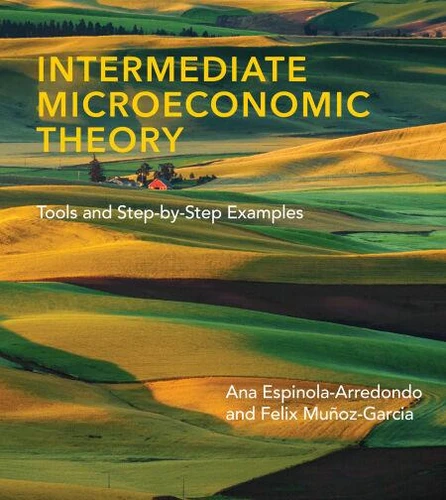
Intermediate Microeconomic Theory. Tools and Step-by-Step Examples
Par : ,Formats :
Disponible dans votre compte client Decitre ou Furet du Nord dès validation de votre commande. Le format Epub fixed layout protégé est :
- Compatible avec une lecture sur My Vivlio (smartphone, tablette, ordinateur)
- Compatible avec une lecture sur liseuses Vivlio
- Pour les liseuses autres que Vivlio, vous devez utiliser le logiciel Adobe Digital Edition. Non compatible avec la lecture sur les liseuses Kindle, Remarkable et Sony
- Non compatible avec un achat hors France métropolitaine
 , qui est-ce ?
Notre partenaire de plateforme de lecture numérique où vous retrouverez l'ensemble de vos ebooks gratuitement
Pour en savoir plus sur nos ebooks, consultez notre aide en ligne ici
C'est si simple ! Lisez votre ebook avec l'app Vivlio sur votre tablette, mobile ou ordinateur :

- Nombre de pages504
- FormatEpub fixed layout
- ISBN978-0-262-35944-3
- EAN9780262359443
- Date de parution27/10/2020
- Protection num.Adobe DRM
- Taille9 Mo
- Infos supplémentairesepub
- ÉditeurThe MIT Press
Résumé
A short, rigorous introduction to intermediate microeconomic theory that offers worked-out examples, tools for solving exercises, and algebra support. This book takes a concise, example-filled approach to intermediate microeconomic theory. It avoids lengthy conceptual description and focuses on worked-out examples and step-by-step solutions. Each chapter presents the basic theoretical elements, reducing them to their main ingredients, and offering several worked-out examples and applications as well as the intuition behind each mathematical assumption and result.
The book provides step-by-step tools for solving standard exercises, offering students a common approach for solving similar problems. The book walks readers through each algebra step and calculation, so only a basic background in algebra and calculus is assumed. The book includes 140 self-assessment exercises, giving students an opportunity to apply concepts from previous worked-out examples.
The book provides step-by-step tools for solving standard exercises, offering students a common approach for solving similar problems. The book walks readers through each algebra step and calculation, so only a basic background in algebra and calculus is assumed. The book includes 140 self-assessment exercises, giving students an opportunity to apply concepts from previous worked-out examples.