
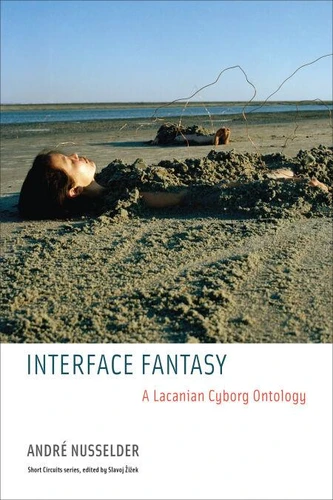
Interface Fantasy. A Lacanian Cyborg Ontology
Par :Formats :
Disponible dans votre compte client Decitre ou Furet du Nord dès validation de votre commande. Le format ePub protégé est :
- Compatible avec une lecture sur My Vivlio (smartphone, tablette, ordinateur)
- Compatible avec une lecture sur liseuses Vivlio
- Pour les liseuses autres que Vivlio, vous devez utiliser le logiciel Adobe Digital Edition. Non compatible avec la lecture sur les liseuses Kindle, Remarkable et Sony
- Non compatible avec un achat hors France métropolitaine
 , qui est-ce ?
Notre partenaire de plateforme de lecture numérique où vous retrouverez l'ensemble de vos ebooks gratuitement
Pour en savoir plus sur nos ebooks, consultez notre aide en ligne ici
C'est si simple ! Lisez votre ebook avec l'app Vivlio sur votre tablette, mobile ou ordinateur :

- Nombre de pages184
- FormatePub
- ISBN978-0-262-26649-9
- EAN9780262266499
- Date de parution11/09/2009
- Protection num.Adobe DRM
- Taille805 Ko
- Infos supplémentairesepub
- ÉditeurThe MIT Press
Résumé
Behind our computer screens we are all cyborgs: through fantasy we can understand our involvement in virtual worlds. Cyberspace is first and foremost a mental space. Therefore we need to take a psychological approach to understand our experiences in it. In Interface Fantasy, André Nusselder uses the core psychoanalytic notion of fantasy to examine our relationship to computers and digital technology.
Lacanian psychoanalysis considers fantasy to be an indispensable "screen" for our interaction with the outside world; Nusselder argues that, at the mental level, computer screens and other human-computer interfaces incorporate this function of fantasy: they mediate the real and the virtual. Interface Fantasy illuminates our attachment to new media: why we love our devices; why we are fascinated by the images on their screens; and how it is possible that virtual images can provide physical pleasure.
Nusselder puts such phenomena as avatars, role playing, cybersex, computer psychotherapy, and Internet addiction in the context of established psychoanalytic theory. The virtual identities we assume in virtual worlds, exemplified best by avatars consisting of both realistic and symbolic self-representations, illustrate the three orders that Lacan uses to analyze human reality: the imaginary, the symbolic, and the real.
Nusselder analyzes our most intimate involvement with information technology-the almost invisible, affective aspects of technology that have the greatest impact on our lives. Interface Fantasy lays the foundation for a new way of thinking that acknowledges the pivotal role of the screen in the current world of information. And it gives an intelligible overview of basic Lacanian principles (including fantasy, language, the virtual, the real, embodiment, and enjoyment) that shows their enormous relevance for understanding the current state of media technology.
Lacanian psychoanalysis considers fantasy to be an indispensable "screen" for our interaction with the outside world; Nusselder argues that, at the mental level, computer screens and other human-computer interfaces incorporate this function of fantasy: they mediate the real and the virtual. Interface Fantasy illuminates our attachment to new media: why we love our devices; why we are fascinated by the images on their screens; and how it is possible that virtual images can provide physical pleasure.
Nusselder puts such phenomena as avatars, role playing, cybersex, computer psychotherapy, and Internet addiction in the context of established psychoanalytic theory. The virtual identities we assume in virtual worlds, exemplified best by avatars consisting of both realistic and symbolic self-representations, illustrate the three orders that Lacan uses to analyze human reality: the imaginary, the symbolic, and the real.
Nusselder analyzes our most intimate involvement with information technology-the almost invisible, affective aspects of technology that have the greatest impact on our lives. Interface Fantasy lays the foundation for a new way of thinking that acknowledges the pivotal role of the screen in the current world of information. And it gives an intelligible overview of basic Lacanian principles (including fantasy, language, the virtual, the real, embodiment, and enjoyment) that shows their enormous relevance for understanding the current state of media technology.