
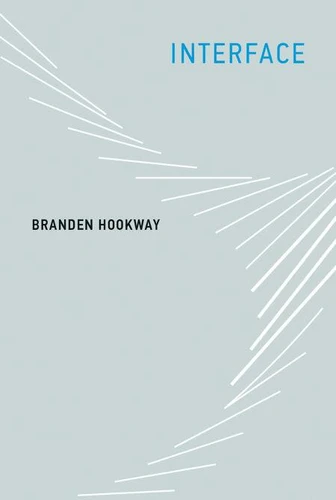
Interface
Par :Formats :
Disponible dans votre compte client Decitre ou Furet du Nord dès validation de votre commande. Le format ePub protégé est :
- Compatible avec une lecture sur My Vivlio (smartphone, tablette, ordinateur)
- Compatible avec une lecture sur liseuses Vivlio
- Pour les liseuses autres que Vivlio, vous devez utiliser le logiciel Adobe Digital Edition. Non compatible avec la lecture sur les liseuses Kindle, Remarkable et Sony
- Non compatible avec un achat hors France métropolitaine
 , qui est-ce ?
Notre partenaire de plateforme de lecture numérique où vous retrouverez l'ensemble de vos ebooks gratuitement
Pour en savoir plus sur nos ebooks, consultez notre aide en ligne ici
C'est si simple ! Lisez votre ebook avec l'app Vivlio sur votre tablette, mobile ou ordinateur :

- Nombre de pages192
- FormatePub
- ISBN978-0-262-32263-8
- EAN9780262322638
- Date de parution04/04/2014
- Protection num.Adobe DRM
- Taille3 Mo
- Infos supplémentairesepub
- ÉditeurThe MIT Press
Résumé
A cultural theory of the interface as a relation that is both ubiquitous and elusive, drawing on disciplines from cultural theory to architecture. In this book, Branden Hookway considers the interface not as technology but as a form of relationship with technology. The interface, Hookway proposes, is at once ubiquitous and hidden from view. It is both the bottleneck through which our relationship to technology must pass and a productive encounter embedded within the use of technology.
It is a site of contestation-between human and machine, between the material and the social, between the political and the technological-that both defines and elides differences. A virtuoso in multiple disciplines, Hookway offers a theory of the interface that draws on cultural theory, political theory, philosophy, art, architecture, new media, and the history of science and technology. He argues that the theoretical mechanism of the interface offers a powerful approach to questions of the human relationship to technology.
Hookway finds the origin of the term interface in nineteenth-century fluid dynamics and traces its migration to thermodynamics, information theory, and cybernetics. He discusses issues of subject formation, agency, power, and control, within contexts that include technology, politics, and the social role of games. He considers the technological augmentation of humans and the human-machine system, discussing notions of embodied intelligence.
Hookway views the figure of the subject as both receiver and active producer in processes of subjectification. The interface, he argues, stands in a relation both alien and intimate, vertiginous and orienting to those who cross its threshold.
It is a site of contestation-between human and machine, between the material and the social, between the political and the technological-that both defines and elides differences. A virtuoso in multiple disciplines, Hookway offers a theory of the interface that draws on cultural theory, political theory, philosophy, art, architecture, new media, and the history of science and technology. He argues that the theoretical mechanism of the interface offers a powerful approach to questions of the human relationship to technology.
Hookway finds the origin of the term interface in nineteenth-century fluid dynamics and traces its migration to thermodynamics, information theory, and cybernetics. He discusses issues of subject formation, agency, power, and control, within contexts that include technology, politics, and the social role of games. He considers the technological augmentation of humans and the human-machine system, discussing notions of embodied intelligence.
Hookway views the figure of the subject as both receiver and active producer in processes of subjectification. The interface, he argues, stands in a relation both alien and intimate, vertiginous and orienting to those who cross its threshold.