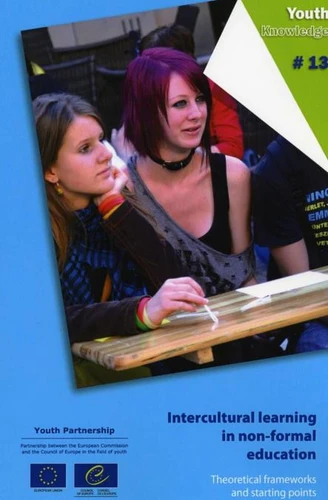
Intercultural learning has long held a central role in European youth work and policy, especially in international youth exchanges. The expectations placed on intercultural learning as a process, as an educational and social objective and, lastly, as a political attitude in relation to diversity remain fully relevant in Europe today. Several factors are necessary for the development of quality youth work, including the capacity to put knowledge and research to good use and, similarly, to present youth work in ways that actors in other social and policy fields can understand.
The work of the partnership between the European Commission and the Council of Europe in the field of youth in the areas of youth-worker training and of intercul¬tural dialogue - in particular the Euro-Mediterranean co-operation activities - has provided many examples of successful experiences in intercultural learning in youth work and of difficulties in communicating about such work. This essay by Susana Lafraya is a contribution to enlarging the circle of communication on intercultural learning experience through youth work.
The connections that she makes between non-formal learning, youth work and intercultural theory sum up much of what has been said in the youth work field in the past years. It is translated and published here with the intention of adding one more stone to the edifice of intercultural learning and non-formal education.
Intercultural learning has long held a central role in European youth work and policy, especially in international youth exchanges. The expectations placed on intercultural learning as a process, as an educational and social objective and, lastly, as a political attitude in relation to diversity remain fully relevant in Europe today. Several factors are necessary for the development of quality youth work, including the capacity to put knowledge and research to good use and, similarly, to present youth work in ways that actors in other social and policy fields can understand.
The work of the partnership between the European Commission and the Council of Europe in the field of youth in the areas of youth-worker training and of intercul¬tural dialogue - in particular the Euro-Mediterranean co-operation activities - has provided many examples of successful experiences in intercultural learning in youth work and of difficulties in communicating about such work. This essay by Susana Lafraya is a contribution to enlarging the circle of communication on intercultural learning experience through youth work.
The connections that she makes between non-formal learning, youth work and intercultural theory sum up much of what has been said in the youth work field in the past years. It is translated and published here with the intention of adding one more stone to the edifice of intercultural learning and non-formal education.