
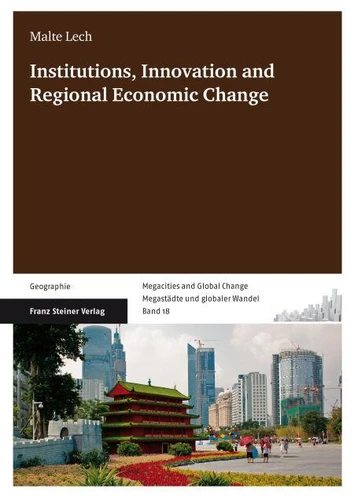
Institutions, Innovation and Regional Economic Change
Par :Formats :
Disponible dans votre compte client Decitre ou Furet du Nord dès validation de votre commande. Le format PDF est :
- Compatible avec une lecture sur My Vivlio (smartphone, tablette, ordinateur)
- Compatible avec une lecture sur liseuses Vivlio
- Pour les liseuses autres que Vivlio, vous devez utiliser le logiciel Adobe Digital Edition. Non compatible avec la lecture sur les liseuses Kindle, Remarkable et Sony
 , qui est-ce ?
Notre partenaire de plateforme de lecture numérique où vous retrouverez l'ensemble de vos ebooks gratuitement
Pour en savoir plus sur nos ebooks, consultez notre aide en ligne ici
C'est si simple ! Lisez votre ebook avec l'app Vivlio sur votre tablette, mobile ou ordinateur :

- Nombre de pages220
- FormatPDF
- ISBN978-3-515-11121-8
- EAN9783515111218
- Date de parution05/06/2015
- Protection num.Digital Watermarking
- Taille8 Mo
- Infos supplémentairespdf
- ÉditeurFranz Steiner
Résumé
The regional economic development model of the Chinese Pearl River Delta is under increasing pressure to adapt. Local firms and their business models are faced with growing competition from other Chinese regions and Asian economies. Along with a slowdown in economic growth, firms and policy-makers are called for a reorganization of business models as well as for an overall adjustment of the regional economic growth model and economic upgrading.
Based on a case study of the electronics industry and supported by a mixed-methods approach, this e-book analyzes the role of formal and informal institutions for the process of regional economic adjustment and allows for an in-depth view into the changing economic landscape of the production cluster in the Pearl River Delta.
It contributes to the emerging field of empirical studies on institutions and economic development in geography. Following a discussion of the role of institutions and innovation for regional economic change, four empirical chapters elaborate the role of firms' strategic adaptation, the role of financial markets for firm innovation, the use of supply-chains for interactive learning, and the role of the party administration and informality for the process regional economic adjustment.
It contributes to the emerging field of empirical studies on institutions and economic development in geography. Following a discussion of the role of institutions and innovation for regional economic change, four empirical chapters elaborate the role of firms' strategic adaptation, the role of financial markets for firm innovation, the use of supply-chains for interactive learning, and the role of the party administration and informality for the process regional economic adjustment.