SOLDES
Jusqu'à -70% sur une sélection d'articles*

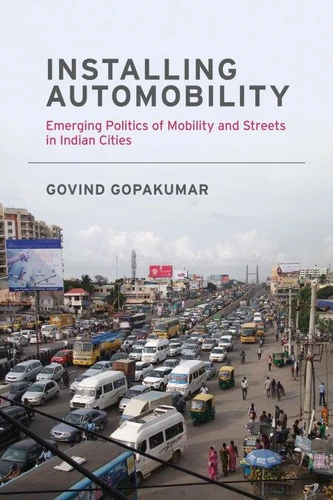
Installing Automobility. Emerging Politics of Mobility and Streets in Indian Cities
Par :Formats :
Disponible dans votre compte client Decitre ou Furet du Nord dès validation de votre commande. Le format ePub protégé est :
- Compatible avec une lecture sur My Vivlio (smartphone, tablette, ordinateur)
- Compatible avec une lecture sur liseuses Vivlio
- Pour les liseuses autres que Vivlio, vous devez utiliser le logiciel Adobe Digital Edition. Non compatible avec la lecture sur les liseuses Kindle, Remarkable et Sony
- Non compatible avec un achat hors France métropolitaine
 , qui est-ce ?
Notre partenaire de plateforme de lecture numérique où vous retrouverez l'ensemble de vos ebooks gratuitement
Pour en savoir plus sur nos ebooks, consultez notre aide en ligne ici
C'est si simple ! Lisez votre ebook avec l'app Vivlio sur votre tablette, mobile ou ordinateur :

- Nombre de pages312
- FormatePub
- ISBN978-0-262-35855-2
- EAN9780262358552
- Date de parution07/04/2020
- Protection num.Adobe DRM
- Taille48 Mo
- Infos supplémentairesepub
- ÉditeurThe MIT Press
Résumé
An examination of the process of prioritizing private motorized transportation in Bengaluru, a rapidly growing megacity of the Global South. Automobiles and their associated infrastructures, deeply embedded in Western cities, have become a rapidly growing presence in the mega-cities of the Global South. Streets once crowded with pedestrians, pushcarts, vendors, and bicyclists are now choked with motor vehicles, many of them private automobiles.
In this book, Govind Gopakumar examines this shift, analyzing the phenomenon of automobility in Bengaluru (formerly known as Bangalore), a rapidly growing city of about ten million people in southern India. He finds that the advent of automobility in Bengaluru has privileged the mobility needs of the elite while marginalizing those of the rest of the population. Gopakumar connects Bengaluru's burgeoning automobility to the city's history and to the spatial, technological, and social interventions of a variety of urban actors.
Automobility becomes a juggernaut, threatening to reorder the city to enhance automotive travel. He discusses the evolution of congestion and urban change in Bengaluru; the "regimes of congestion" that emerge to address the issue; an "infrastructurescape" that shapes the mobile behavior of all residents but is largely governed by the privileged; and the enfranchisement of an "automotive citizenship" (and the disenfranchisement of non-automobile-using publics).
Gopakumar also finds that automobility in Bengaluru faces ongoing challenges from such diverse sources as waste flows, popular religiosity, and political leadership. These challenges, however, introduce messiness without upsetting automobility. He therefore calls for efforts to displace automobility that are grounded in reordering the mobility regime, relandscaping the city and its infrastructures, and reclaiming streets for other uses.
In this book, Govind Gopakumar examines this shift, analyzing the phenomenon of automobility in Bengaluru (formerly known as Bangalore), a rapidly growing city of about ten million people in southern India. He finds that the advent of automobility in Bengaluru has privileged the mobility needs of the elite while marginalizing those of the rest of the population. Gopakumar connects Bengaluru's burgeoning automobility to the city's history and to the spatial, technological, and social interventions of a variety of urban actors.
Automobility becomes a juggernaut, threatening to reorder the city to enhance automotive travel. He discusses the evolution of congestion and urban change in Bengaluru; the "regimes of congestion" that emerge to address the issue; an "infrastructurescape" that shapes the mobile behavior of all residents but is largely governed by the privileged; and the enfranchisement of an "automotive citizenship" (and the disenfranchisement of non-automobile-using publics).
Gopakumar also finds that automobility in Bengaluru faces ongoing challenges from such diverse sources as waste flows, popular religiosity, and political leadership. These challenges, however, introduce messiness without upsetting automobility. He therefore calls for efforts to displace automobility that are grounded in reordering the mobility regime, relandscaping the city and its infrastructures, and reclaiming streets for other uses.