
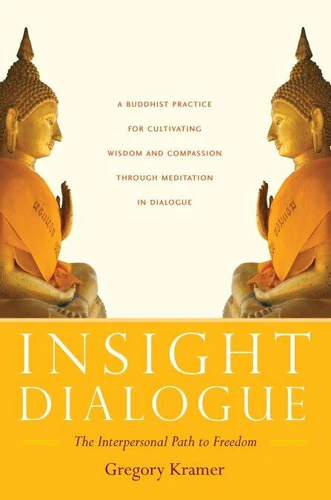
Insight Dialogue. The Interpersonal Path to Freedom
Par :Formats :
Disponible dans votre compte client Decitre ou Furet du Nord dès validation de votre commande. Le format ePub protégé est :
- Compatible avec une lecture sur My Vivlio (smartphone, tablette, ordinateur)
- Compatible avec une lecture sur liseuses Vivlio
- Pour les liseuses autres que Vivlio, vous devez utiliser le logiciel Adobe Digital Edition. Non compatible avec la lecture sur les liseuses Kindle, Remarkable et Sony
- Non compatible avec un achat hors France métropolitaine
 , qui est-ce ?
Notre partenaire de plateforme de lecture numérique où vous retrouverez l'ensemble de vos ebooks gratuitement
Pour en savoir plus sur nos ebooks, consultez notre aide en ligne ici
C'est si simple ! Lisez votre ebook avec l'app Vivlio sur votre tablette, mobile ou ordinateur :

- Nombre de pages272
- FormatePub
- ISBN978-0-8348-2444-7
- EAN9780834824447
- Date de parution11/09/2007
- Protection num.Adobe DRM
- Taille455 Ko
- Infos supplémentairesepub
- ÉditeurShambhala
Résumé
Insight Dialogue is a way of bringing the tranquility and insight attained in meditation directly into your interactions with other people. It's a practice that involves interacting with a partner in a retreat setting or on your own, as a way of accessing a profound kind of insight. Then, you take that insight on into the grind of everyday human interactions. Gregory Kramer has been teaching the practice (which he originated) for more than a decade in retreats around the world.
It's something strikingly new in the world of Buddhist practice-yet it's completely grounded in traditional Buddhist teaching. Kramer begins with a detailed presentation of the central Buddhist teaching of the Four Noble Truths seen through an interpersonal lens. Because dukkha (suffering or unsatisfactoriness) is often most forcefully felt in our relations with others, interpersonal relationships are a wonderfully useful place to practice.
He breaks the Noble Truths down into component parts to observe how they manifest particularly in relationship to others, using examples from his own life and practice, as well as from his students'. He then goes on to present the practice as it's taught in his workshops and retreats. There are a few basic steps to the practice, deceptively simple to describe: (1) pause, (2) relax, (3) open, (4) trust emergence, (5) listen deeply, and (6) speak the truth.
The sequence begins following a period of meditation, and includes periods of speaking, listening, and mutual silence. Kramer includes numerous examples of people's experience with the practice from his retreats, and shows how the insight gained from the techniques can be brought into real life. More than just testimonials for how well the practice "works, " the personal stories demonstrate the problems that arise, the different routes the practice can follow, and the sometimes surprising insights that are gained.
It's something strikingly new in the world of Buddhist practice-yet it's completely grounded in traditional Buddhist teaching. Kramer begins with a detailed presentation of the central Buddhist teaching of the Four Noble Truths seen through an interpersonal lens. Because dukkha (suffering or unsatisfactoriness) is often most forcefully felt in our relations with others, interpersonal relationships are a wonderfully useful place to practice.
He breaks the Noble Truths down into component parts to observe how they manifest particularly in relationship to others, using examples from his own life and practice, as well as from his students'. He then goes on to present the practice as it's taught in his workshops and retreats. There are a few basic steps to the practice, deceptively simple to describe: (1) pause, (2) relax, (3) open, (4) trust emergence, (5) listen deeply, and (6) speak the truth.
The sequence begins following a period of meditation, and includes periods of speaking, listening, and mutual silence. Kramer includes numerous examples of people's experience with the practice from his retreats, and shows how the insight gained from the techniques can be brought into real life. More than just testimonials for how well the practice "works, " the personal stories demonstrate the problems that arise, the different routes the practice can follow, and the sometimes surprising insights that are gained.