
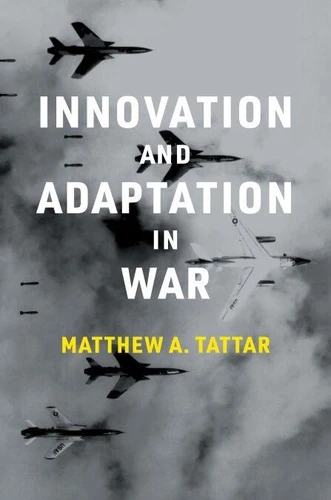
Innovation and Adaptation in War
Par :Formats :
Disponible dans votre compte client Decitre ou Furet du Nord dès validation de votre commande. Le format ePub protégé est :
- Compatible avec une lecture sur My Vivlio (smartphone, tablette, ordinateur)
- Compatible avec une lecture sur liseuses Vivlio
- Pour les liseuses autres que Vivlio, vous devez utiliser le logiciel Adobe Digital Edition. Non compatible avec la lecture sur les liseuses Kindle, Remarkable et Sony
- Non compatible avec un achat hors France métropolitaine
 , qui est-ce ?
Notre partenaire de plateforme de lecture numérique où vous retrouverez l'ensemble de vos ebooks gratuitement
Pour en savoir plus sur nos ebooks, consultez notre aide en ligne ici
C'est si simple ! Lisez votre ebook avec l'app Vivlio sur votre tablette, mobile ou ordinateur :

- Nombre de pages304
- FormatePub
- ISBN978-0-262-37272-5
- EAN9780262372725
- Date de parution20/05/2025
- Protection num.Adobe DRM
- Taille799 Ko
- Infos supplémentairesepub
- ÉditeurThe MIT Press
Résumé
An analysis of advances in military technology that illustrates the importance of organizational flexibility in both an attacker's innovations and an opponent's adaptations. How important is military innovation in determining outcomes during armed conflict? In Innovation and Adaptation in War, Matthew Tattar questions the conventional wisdom that, to succeed, military organizations must innovate early and often.
Because successful methods of warfare are soon widely imitated or countered on the international stage, the advantages of a particular innovation quickly evaporate. Therefore, Tattar argues, large-scale innovations at the cost of organizational flexibility and the ability to adapt to an adversary's innovations may not be the optimal path-not just because force readiness is vital but also because innovation does not provide as long-lasting and decisive an advantage as may have been previously thought.
Although other scholars have analyzed the sources of military innovation, Tattar is the first to focus on the relationship between innovation and specific military outcomes. Looking at several different types of military organizations and many different types of battles, he draws on theoretical works, in-depth historical research, and case studies, and finds that the initial advantages that are generated by innovation disappear far too rapidly in wartime for militaries to depend on them for victory.
Furthermore, as Tattar demonstrates, emphasizing innovation in defense planning at the expense of organizational flexibility can have significant negative consequences. The decisive factor in successful adaptation, more often than not, is a well-positioned and flexible organization. Providing both a new framework for studying military innovation and a comprehensive review of the current literature in this field, Innovation and Adaptation in War offers crucial policymaking insights into when and under what circumstances militaries should innovate and adapt.
Because successful methods of warfare are soon widely imitated or countered on the international stage, the advantages of a particular innovation quickly evaporate. Therefore, Tattar argues, large-scale innovations at the cost of organizational flexibility and the ability to adapt to an adversary's innovations may not be the optimal path-not just because force readiness is vital but also because innovation does not provide as long-lasting and decisive an advantage as may have been previously thought.
Although other scholars have analyzed the sources of military innovation, Tattar is the first to focus on the relationship between innovation and specific military outcomes. Looking at several different types of military organizations and many different types of battles, he draws on theoretical works, in-depth historical research, and case studies, and finds that the initial advantages that are generated by innovation disappear far too rapidly in wartime for militaries to depend on them for victory.
Furthermore, as Tattar demonstrates, emphasizing innovation in defense planning at the expense of organizational flexibility can have significant negative consequences. The decisive factor in successful adaptation, more often than not, is a well-positioned and flexible organization. Providing both a new framework for studying military innovation and a comprehensive review of the current literature in this field, Innovation and Adaptation in War offers crucial policymaking insights into when and under what circumstances militaries should innovate and adapt.