SOLDES
Jusqu'à -70% sur une sélection d'articles*

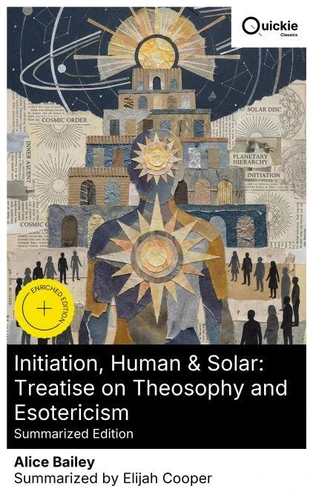
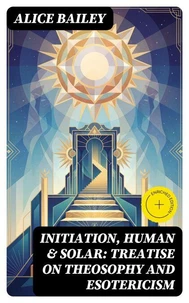
Initiation, Human & Solar: Treatise on Theosophy and Esotericism (Summarized Edition). Enriched edition. A Guide to the Spiritual Hierarchy, Seven Rays, and Group Initiation for World Service
Par : ,Formats :
Disponible dans votre compte client Decitre ou Furet du Nord dès validation de votre commande. Le format ePub est :
- Compatible avec une lecture sur My Vivlio (smartphone, tablette, ordinateur)
- Compatible avec une lecture sur liseuses Vivlio
- Pour les liseuses autres que Vivlio, vous devez utiliser le logiciel Adobe Digital Edition. Non compatible avec la lecture sur les liseuses Kindle, Remarkable et Sony
 , qui est-ce ?
Notre partenaire de plateforme de lecture numérique où vous retrouverez l'ensemble de vos ebooks gratuitement
Pour en savoir plus sur nos ebooks, consultez notre aide en ligne ici
C'est si simple ! Lisez votre ebook avec l'app Vivlio sur votre tablette, mobile ou ordinateur :

- Nombre de pages101
- FormatePub
- ISBN859-65--4787710-3
- EAN8596547877103
- Date de parution10/01/2026
- Protection num.Digital Watermarking
- Taille951 Ko
- Infos supplémentairesepub
- ÉditeurQUICKIE CLASSICS
Résumé
Initiation, Human & Solar articulates a graded map of spiritual unfoldment, situating individual discipleship within a planetary and solar economy of consciousness. Bailey surveys the initiatory thresholds, the constitution of the spiritual Hierarchy, the Rays and their psychological coloring, and the disciplines-ethical, meditative, and ceremonial-by which candidates prepare. Its prose is schematic and didactic, favoring numbered sequences, technical terms, and correspondences that link microcosm to macrocosm.
Composed in the post-Blavatsky Theosophical milieu, the book synthesizes Indic tropes with Western esoteric cosmology, and reframes initiation from a solitary ascent to an impersonal science of service. Alice A. Bailey (1880-1949), a British-born esotericist who worked within and then beyond the Theosophical Society, founded the Lucis Publishing Company and the Arcane School to systematize occult training for the modern era.
Claiming telepathic collaboration with the Tibetan Djwhal Khul, she recast the secret lodge ideal into a pedagogical program stressing group initiation and world service. Her missionary youth, administrative experience, and immersion in postwar humanitarianism inform the text's insistence that spiritual attainment is measured by capacity to organize, teach, and heal within a wider planetary synthesis.
Recommended to students of Western esotericism, religious studies, and practitioners seeking disciplined, service-oriented initiatory frameworks. Quickie Classics summarizes timeless works with precision, preserving the author's voice and keeping the prose clear, fast, and readable-distilled, never diluted. Enriched Edition extras: Introduction · Synopsis · Historical Context · Brief Analysis · 4 Reflection Q&As · Editorial Footnotes.
Composed in the post-Blavatsky Theosophical milieu, the book synthesizes Indic tropes with Western esoteric cosmology, and reframes initiation from a solitary ascent to an impersonal science of service. Alice A. Bailey (1880-1949), a British-born esotericist who worked within and then beyond the Theosophical Society, founded the Lucis Publishing Company and the Arcane School to systematize occult training for the modern era.
Claiming telepathic collaboration with the Tibetan Djwhal Khul, she recast the secret lodge ideal into a pedagogical program stressing group initiation and world service. Her missionary youth, administrative experience, and immersion in postwar humanitarianism inform the text's insistence that spiritual attainment is measured by capacity to organize, teach, and heal within a wider planetary synthesis.
Recommended to students of Western esotericism, religious studies, and practitioners seeking disciplined, service-oriented initiatory frameworks. Quickie Classics summarizes timeless works with precision, preserving the author's voice and keeping the prose clear, fast, and readable-distilled, never diluted. Enriched Edition extras: Introduction · Synopsis · Historical Context · Brief Analysis · 4 Reflection Q&As · Editorial Footnotes.
A propos de Alice Bailey



0,99 €




1,99 €

1,99 €