SOLDES
Jusqu'à -70% sur une sélection d'articles*

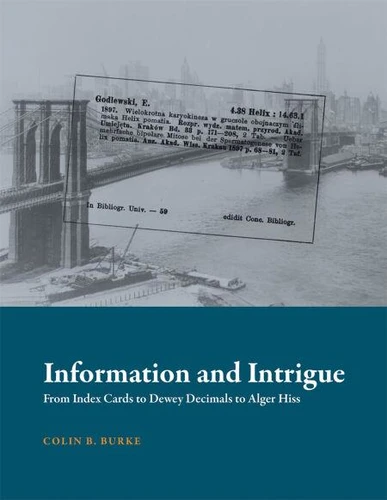
Information and Intrigue. From Index Cards to Dewey Decimals to Alger Hiss
Par :Formats :
Disponible dans votre compte client Decitre ou Furet du Nord dès validation de votre commande. Le format ePub protégé est :
- Compatible avec une lecture sur My Vivlio (smartphone, tablette, ordinateur)
- Compatible avec une lecture sur liseuses Vivlio
- Pour les liseuses autres que Vivlio, vous devez utiliser le logiciel Adobe Digital Edition. Non compatible avec la lecture sur les liseuses Kindle, Remarkable et Sony
- Non compatible avec un achat hors France métropolitaine
 , qui est-ce ?
Notre partenaire de plateforme de lecture numérique où vous retrouverez l'ensemble de vos ebooks gratuitement
Pour en savoir plus sur nos ebooks, consultez notre aide en ligne ici
C'est si simple ! Lisez votre ebook avec l'app Vivlio sur votre tablette, mobile ou ordinateur :

- Nombre de pages384
- FormatePub
- ISBN978-0-262-32336-9
- EAN9780262323369
- Date de parution16/05/2014
- Protection num.Adobe DRM
- Taille2 Mo
- Infos supplémentairesepub
- ÉditeurThe MIT Press
Résumé
An account of Herbert Field's quest for a new way of organizing information and how information systems are produced by ideology as well as technology. In Information and Intrigue Colin Burke tells the story of one man's plan to revolutionize the world's science information systems and how science itself became enmeshed with ideology and the institutions of modern liberalism. In the 1890s, the idealistic American Herbert Haviland Field established the Concilium Bibliographicum, a Switzerland-based science information service that sent millions of index cards to American and European scientists.
Field's radical new idea was to index major ideas rather than books or documents. In his struggle to create and maintain his system, Field became entangled with nationalistic struggles over the control of science information, the new system of American philanthropy (powered by millionaires), the politics of an emerging American professional science, and in the efforts of another information visionary, Paul Otlet, to create a pre-digital worldwide database for all subjects.
World War I shuttered the Concilium, and postwar efforts to revive it failed. Field himself died in the influenza epidemic of 1918. Burke carries the story into the next generation, however, describing the astonishingly varied career of Field's son, Noel, who became a diplomat, an information source for Soviet intelligence (as was his friend Alger Hiss), a secret World War II informant for Allen Dulles, and a prisoner of Stalin.
Along the way, Burke touches on a range of topics, including the new entrepreneurial university, Soviet espionage in America, and further efforts to classify knowledge.
Field's radical new idea was to index major ideas rather than books or documents. In his struggle to create and maintain his system, Field became entangled with nationalistic struggles over the control of science information, the new system of American philanthropy (powered by millionaires), the politics of an emerging American professional science, and in the efforts of another information visionary, Paul Otlet, to create a pre-digital worldwide database for all subjects.
World War I shuttered the Concilium, and postwar efforts to revive it failed. Field himself died in the influenza epidemic of 1918. Burke carries the story into the next generation, however, describing the astonishingly varied career of Field's son, Noel, who became a diplomat, an information source for Soviet intelligence (as was his friend Alger Hiss), a secret World War II informant for Allen Dulles, and a prisoner of Stalin.
Along the way, Burke touches on a range of topics, including the new entrepreneurial university, Soviet espionage in America, and further efforts to classify knowledge.