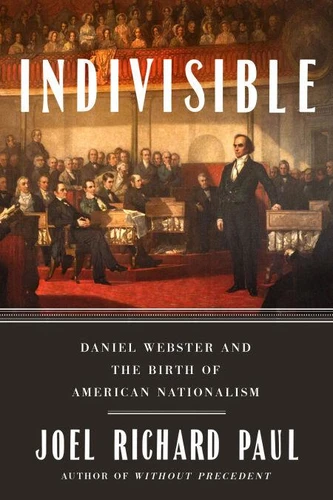
Indivisible. Daniel Webster and the Birth of American Nationalism
Par :Formats :
Disponible dans votre compte client Decitre ou Furet du Nord dès validation de votre commande. Le format ePub protégé est :
- Compatible avec une lecture sur My Vivlio (smartphone, tablette, ordinateur)
- Compatible avec une lecture sur liseuses Vivlio
- Pour les liseuses autres que Vivlio, vous devez utiliser le logiciel Adobe Digital Edition. Non compatible avec la lecture sur les liseuses Kindle, Remarkable et Sony
- Non compatible avec un achat hors France métropolitaine
 , qui est-ce ?
Notre partenaire de plateforme de lecture numérique où vous retrouverez l'ensemble de vos ebooks gratuitement
Pour en savoir plus sur nos ebooks, consultez notre aide en ligne ici
C'est si simple ! Lisez votre ebook avec l'app Vivlio sur votre tablette, mobile ou ordinateur :

- Nombre de pages528
- FormatePub
- ISBN978-0-593-18906-1
- EAN9780593189061
- Date de parution25/10/2022
- Protection num.Adobe DRM
- Taille2 Mo
- Infos supplémentairesepub
- ÉditeurRiverhead Books
Résumé
The story of how Daniel Webster popularized the ideals of American nationalism that helped forge our nation's identity and inspire Abraham Lincoln to preserve the Union When the United States was founded in 1776, its citizens didn't think of themselves as "Americans." They were New Yorkers or Virginians or Pennsylvanians. It was decades later that the seeds of American nationalism-identifying with one's own nation and supporting its broader interests-began to take root.
But what kind of nationalism should Americans embrace? The state-focused and racist nationalism of Thomas Jefferson and Andrew Jackson? Or the belief that the U. S. Constitution made all Americans one nation, indivisible, which Daniel Webster and others espoused? In Indivisible, historian and law professor Joel Richard Paul tells the fascinating story of how Webster, a young New Hampshire attorney turned politician, rose to national prominence through his powerful oratory and unwavering belief in the United States and captured the national imagination.
In his speeches, on the floors of the House and Senate, in court, and as Secretary of State, Webster argued that the Constitution was not a compact made by states but an expression of the will of all Americans. As the greatest orator of his age, Webster saw his speeches and writings published widely, and his stirring rhetoric convinced Americans to see themselves differently, as a nation bound together by a government of laws, not parochial interests.
As these ideas took root, they influenced future leaders, among them Abraham Lincoln, who drew on them to hold the nation together during the Civil War. As he did in Without Precedent and Unlikely Allies, Joel Richard Paul has written in Indivisible both a compelling history and a fascinating account of one of the founders of our national perspective.
But what kind of nationalism should Americans embrace? The state-focused and racist nationalism of Thomas Jefferson and Andrew Jackson? Or the belief that the U. S. Constitution made all Americans one nation, indivisible, which Daniel Webster and others espoused? In Indivisible, historian and law professor Joel Richard Paul tells the fascinating story of how Webster, a young New Hampshire attorney turned politician, rose to national prominence through his powerful oratory and unwavering belief in the United States and captured the national imagination.
In his speeches, on the floors of the House and Senate, in court, and as Secretary of State, Webster argued that the Constitution was not a compact made by states but an expression of the will of all Americans. As the greatest orator of his age, Webster saw his speeches and writings published widely, and his stirring rhetoric convinced Americans to see themselves differently, as a nation bound together by a government of laws, not parochial interests.
As these ideas took root, they influenced future leaders, among them Abraham Lincoln, who drew on them to hold the nation together during the Civil War. As he did in Without Precedent and Unlikely Allies, Joel Richard Paul has written in Indivisible both a compelling history and a fascinating account of one of the founders of our national perspective.