Robert Alexander Innes is a member of Cowessess First Nation and associate professor in the Indigenous Studies Program and the Department of Political Science at McMaster University. He is the author of Elder Brother and the Law of the People and and co-editor, with Kim Anderson, of Indigenous Men and Masculinities.
Kim Anderson is a Cree/Métis writer, Canada Research Chair in Indigenous Relationships, and Associate Professor in the Department of Family Relations and Applied Nutrition at the University of Guelph.
Niigaanwewidam James Sinclair (Anishinaabe) is Assistant Professor in the departments of English and Native Studies at the University of Manitoba.
Sam McKegney is a teacher and scholar of Indigenous and Canadian literature at Queen's University.
Robert Henry is Métis from Prince Albert, Saskatchewan, assistant professor at the University of Saskatchewan in the Department of Indigenous Studies, and co-director of the natawihowin and mamawiikikayaahk Research Networks.
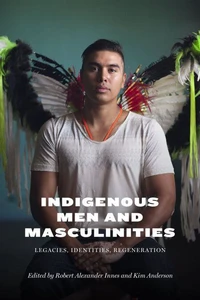
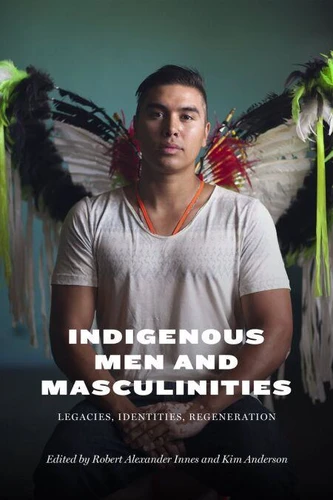
Indigenous Men and Masculinities. Legacies, Identities, Regeneration
Par : , , , ,Formats :
Disponible dans votre compte client Decitre ou Furet du Nord dès validation de votre commande. Le format ePub est :
- Compatible avec une lecture sur My Vivlio (smartphone, tablette, ordinateur)
- Compatible avec une lecture sur liseuses Vivlio
- Pour les liseuses autres que Vivlio, vous devez utiliser le logiciel Adobe Digital Edition. Non compatible avec la lecture sur les liseuses Kindle, Remarkable et Sony
 , qui est-ce ?
Notre partenaire de plateforme de lecture numérique où vous retrouverez l'ensemble de vos ebooks gratuitement
Pour en savoir plus sur nos ebooks, consultez notre aide en ligne ici
C'est si simple ! Lisez votre ebook avec l'app Vivlio sur votre tablette, mobile ou ordinateur :

- Nombre de pages328
- FormatePub
- ISBN978-0-88755-477-3
- EAN9780887554773
- Date de parution06/11/2015
- Protection num.Digital Watermarking
- Taille11 Mo
- Infos supplémentairesepub
- ÉditeurUniversity of Manitoba Press
Résumé
What do we know of masculinities in non-patriarchal societies? Indigenous peoples of the Americas and beyond come from traditions of gender equity, complementarity, and the sacred feminine, concepts that were unimaginable and shocking to Euro-western peoples at contact. Indigenous Men and Masculinities, edited by Kim Anderson and Robert Alexander Innes, brings together prominent thinkers to explore the meaning of masculinities and being a man within such traditions, further examining the colonial disruption and imposition of patriarchy on Indigenous men.
Building on Indigenous knowledge systems, Indigenous feminism, and queer theory, the sixteen essays by scholars and activists from Canada, the U. S., and New Zealand open pathways for the nascent field of Indigenous masculinities. The authors explore subjects of representation through art and literature, as well as Indigenous masculinities in sport, prisons, and gangs. Indigenous Men and Masculinities highlights voices of Indigenous male writers, traditional knowledge keepers, ex-gang members, war veterans, fathers, youth, two-spirited people, and Indigenous men working to end violence against women.
It offers a refreshing vision toward equitable societies that celebrate healthy and diverse masculinities.
Building on Indigenous knowledge systems, Indigenous feminism, and queer theory, the sixteen essays by scholars and activists from Canada, the U. S., and New Zealand open pathways for the nascent field of Indigenous masculinities. The authors explore subjects of representation through art and literature, as well as Indigenous masculinities in sport, prisons, and gangs. Indigenous Men and Masculinities highlights voices of Indigenous male writers, traditional knowledge keepers, ex-gang members, war veterans, fathers, youth, two-spirited people, and Indigenous men working to end violence against women.
It offers a refreshing vision toward equitable societies that celebrate healthy and diverse masculinities.