SOLDES
Jusqu'à -70% sur une sélection d'articles*

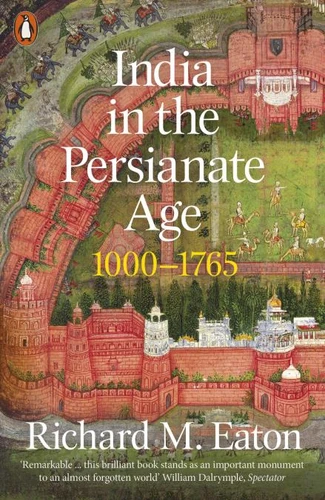
India in the Persianate Age. 1000-1765
Par :Formats :
Disponible dans votre compte client Decitre ou Furet du Nord dès validation de votre commande. Le format ePub protégé est :
- Compatible avec une lecture sur My Vivlio (smartphone, tablette, ordinateur)
- Compatible avec une lecture sur liseuses Vivlio
- Pour les liseuses autres que Vivlio, vous devez utiliser le logiciel Adobe Digital Edition. Non compatible avec la lecture sur les liseuses Kindle, Remarkable et Sony
- Non compatible avec un achat hors France métropolitaine
 , qui est-ce ?
Notre partenaire de plateforme de lecture numérique où vous retrouverez l'ensemble de vos ebooks gratuitement
Pour en savoir plus sur nos ebooks, consultez notre aide en ligne ici
C'est si simple ! Lisez votre ebook avec l'app Vivlio sur votre tablette, mobile ou ordinateur :

- Nombre de pages512
- FormatePub
- ISBN978-0-14-196655-7
- EAN9780141966557
- Date de parution25/07/2019
- Protection num.Adobe DRM
- Infos supplémentairesepub
- ÉditeurPENGUIN
Résumé
SHORTLISTED FOR THE 2020 CUNDILL HISTORY PRIZE'Remarkable ... this brilliant book stands as an important monument to an almost forgotten world' William Dalrymple, Spectator A sweeping, magisterial new history of India from the middle ages to the arrival of the BritishThe Indian subcontinent might seem a self-contained world. Protected by vast mountains and seas, it has created its own religions, philosophies and social systems.
And yet this ancient land experienced prolonged and intense interaction with the peoples and cultures of East and Southeast Asia, Europe, Africa and, especially, Central Asia and the Iranian plateau between the eleventh and eighteenth centuries. Richard M. Eaton's wonderful new book tells this extraordinary story with relish and originality. His major theme is the rise of 'Persianate' culture - a many-faceted transregional world informed by a canon of texts that circulated through ever-widening networks across much of Asia.
Introduced to India in the eleventh century by dynasties based in eastern Afghanistan, this culture would become thoroughly indigenized by the time of the great Mughals in the sixteenth, seventeenth, and eighteenth centuries. This long-term process of cultural interaction and assimilation is reflected in India's language, literature, cuisine, attire, religion, styles of rulership and warfare, science, art, music, architecture, and more.
The book brilliantly elaborates the complex encounter between India's Sanskrit culture - which continued to flourish and grow throughout this period - and Persian culture, which helped shape the Delhi Sultanate, the Mughal Empire and a host of regional states, and made India what it is today.
And yet this ancient land experienced prolonged and intense interaction with the peoples and cultures of East and Southeast Asia, Europe, Africa and, especially, Central Asia and the Iranian plateau between the eleventh and eighteenth centuries. Richard M. Eaton's wonderful new book tells this extraordinary story with relish and originality. His major theme is the rise of 'Persianate' culture - a many-faceted transregional world informed by a canon of texts that circulated through ever-widening networks across much of Asia.
Introduced to India in the eleventh century by dynasties based in eastern Afghanistan, this culture would become thoroughly indigenized by the time of the great Mughals in the sixteenth, seventeenth, and eighteenth centuries. This long-term process of cultural interaction and assimilation is reflected in India's language, literature, cuisine, attire, religion, styles of rulership and warfare, science, art, music, architecture, and more.
The book brilliantly elaborates the complex encounter between India's Sanskrit culture - which continued to flourish and grow throughout this period - and Persian culture, which helped shape the Delhi Sultanate, the Mughal Empire and a host of regional states, and made India what it is today.