SOLDES
Jusqu'à -70% sur une sélection d'articles*

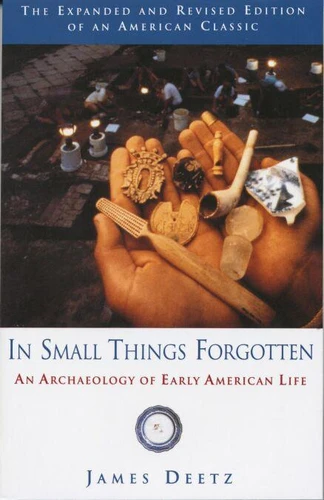
In Small Things Forgotten. An Archaeology of Early American Life
Par :Formats :
Disponible dans votre compte client Decitre ou Furet du Nord dès validation de votre commande. Le format ePub protégé est :
- Compatible avec une lecture sur My Vivlio (smartphone, tablette, ordinateur)
- Compatible avec une lecture sur liseuses Vivlio
- Pour les liseuses autres que Vivlio, vous devez utiliser le logiciel Adobe Digital Edition. Non compatible avec la lecture sur les liseuses Kindle, Remarkable et Sony
- Non compatible avec un achat hors France métropolitaine
 , qui est-ce ?
Notre partenaire de plateforme de lecture numérique où vous retrouverez l'ensemble de vos ebooks gratuitement
Pour en savoir plus sur nos ebooks, consultez notre aide en ligne ici
C'est si simple ! Lisez votre ebook avec l'app Vivlio sur votre tablette, mobile ou ordinateur :

- Nombre de pages304
- FormatePub
- ISBN978-0-307-87438-2
- EAN9780307874382
- Date de parution07/07/2010
- Protection num.Adobe DRM
- Taille4 Mo
- Infos supplémentairesepub
- ÉditeurAnchor
Résumé
A fascinating study of American life and an explanation of how American life is studied through the everyday details of ordinary living, colorfully depicting a world hundreds of years in the past. History is recorded in many ways. According to author James Deetz, the past can be seen most fully by studying the small things so often forgotten. Objects such as doorways, gravestones, musical instruments, and even shards of pottery fill in the cracks between large historical events and depict the intricacies of daily life.
In his completely revised and expanded edition of In Small Things Forgotten, Deetz has added new sections that more fully acknowledge the presence of women and African Americans in Colonial America. New interpretations of archaeological finds detail how minorities influenced and were affected by the development of the Anglo-American tradition in the years following the settlers' arrival in Plymouth, Massachusetts in 1620.
Among Deetz's observations:Subtle changes in building long before the Revolutionary War hinted at the growing independence of the American colonies and their desire to be less like the British. Records of estate auctions show that many households in Colonial America contained only one chair-underscoring the patriarchal nature of the early American family. All other members of the household sat on stools or the floor.
The excavation of a tiny community of freed slaves in Massachusetts reveals evidence of the transplantation of African culture to North America.
In his completely revised and expanded edition of In Small Things Forgotten, Deetz has added new sections that more fully acknowledge the presence of women and African Americans in Colonial America. New interpretations of archaeological finds detail how minorities influenced and were affected by the development of the Anglo-American tradition in the years following the settlers' arrival in Plymouth, Massachusetts in 1620.
Among Deetz's observations:Subtle changes in building long before the Revolutionary War hinted at the growing independence of the American colonies and their desire to be less like the British. Records of estate auctions show that many households in Colonial America contained only one chair-underscoring the patriarchal nature of the early American family. All other members of the household sat on stools or the floor.
The excavation of a tiny community of freed slaves in Massachusetts reveals evidence of the transplantation of African culture to North America.