SOLDES
Jusqu'à -70% sur une sélection d'articles*

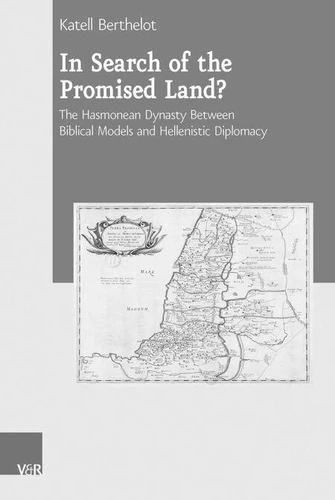
In Search of the Promised Land?. The Hasmonean Dynasty Between Biblical Models and Hellenistic Diplomacy
Par :Formats :
Disponible dans votre compte client Decitre ou Furet du Nord dès validation de votre commande. Le format PDF est :
- Compatible avec une lecture sur My Vivlio (smartphone, tablette, ordinateur)
- Compatible avec une lecture sur liseuses Vivlio
- Pour les liseuses autres que Vivlio, vous devez utiliser le logiciel Adobe Digital Edition. Non compatible avec la lecture sur les liseuses Kindle, Remarkable et Sony
 , qui est-ce ?
Notre partenaire de plateforme de lecture numérique où vous retrouverez l'ensemble de vos ebooks gratuitement
Pour en savoir plus sur nos ebooks, consultez notre aide en ligne ici
C'est si simple ! Lisez votre ebook avec l'app Vivlio sur votre tablette, mobile ou ordinateur :

- Nombre de pages494
- FormatPDF
- ISBN978-3-647-55252-1
- EAN9783647552521
- Date de parution13/11/2017
- Protection num.pas de protection
- Taille4 Mo
- Infos supplémentairespdf
- ÉditeurVandenhoeck & Ruprecht
Résumé
Katell Berthelot challenges the widespread historiographical consensus that the Hasmoneans embarked on wars of conquest in order to reconquer the Promised Land, the Biblical Land of Israel. She shows that the sources used in support of this consensus - such as 1 Maccabees 15:33-35 - have been over-interpreted. She suggests a different approach to this question. In particular, she argues that in 1 Maccabees, the Hasmoneans deliberately imitate the language ascribed to the Seleucid kings, and that the discourse on the Land found in 1 Maccabees, is congruent with the language of property rights over a given territory in the rhetoric of Hellenistic diplomacy.
Berthelot's close examination of accounts by Josephus and other writers, as well as of archaeological and numismatic data, allows her to reconstruct the different factors that led to the Hasmonean wars of conquest.
Although Hasmonean leaders were clearly motivated by politico-religious objectives (e.g. getting rid of competing temples in areas under their control), the Deuteronomic commandment to wipe out the inhabitants of the Land and abolish idolatry does not necessarily account for their acts of destruction and the so-called 'forced conversion' of the Idumeans, the Itureans and other groups. Instead, Berthelot's analysis of the sources leads her to reach a different conclusion. Finally, Berthelot investigates the echoes of the Hasmonean wars of conquest in the Dead Sea Scrolls and their memory in rabbinic literature.
This allows her to show that, contrary to expectation, there is little evidence that the Hasmonean dynasty was perceived as having reconquered the Promised Land or restored the people of Israel within the borders of the Land of Israel.
Although Hasmonean leaders were clearly motivated by politico-religious objectives (e.g. getting rid of competing temples in areas under their control), the Deuteronomic commandment to wipe out the inhabitants of the Land and abolish idolatry does not necessarily account for their acts of destruction and the so-called 'forced conversion' of the Idumeans, the Itureans and other groups. Instead, Berthelot's analysis of the sources leads her to reach a different conclusion. Finally, Berthelot investigates the echoes of the Hasmonean wars of conquest in the Dead Sea Scrolls and their memory in rabbinic literature.
This allows her to show that, contrary to expectation, there is little evidence that the Hasmonean dynasty was perceived as having reconquered the Promised Land or restored the people of Israel within the borders of the Land of Israel.