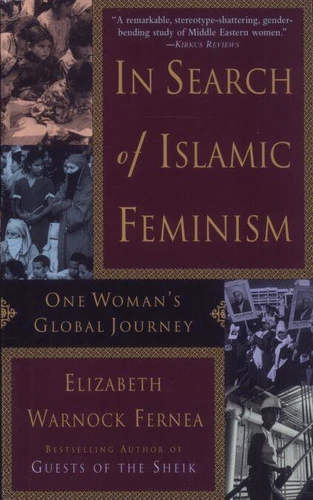
An acclaimed Arab Studies scholar and bestselling author offers a groundbreaking new interpretation of the status and vision of Muslim women-and challenges our own sense of the meaning of feminism. "Islamic feminism" would seem a contradiction in terms to most Westerners. We are taught to think of Islam as a culture wherein social code and religious law alike force women to accept male authority and surrender to the veil.
How could feminism emerge under such a code, let alone flourish? Now, traveling throughout Central Asia, Africa, and the Middle East, as well as Islamic communities in the United States, acclaimed Arab Studies scholar and bestselling author Elizabeth Fernea sets out to answer that question. Fernea's dialogue with friends, colleagues, and acquaintances prompts a range of diverse and unpredictable responses, but in every country she visits, women demonstrate they are anything but passive.
In Iraq, we see an 85 percent literacy rate among women; in Egypt, we see women owning their own farms; and in Israel, we see women at the very forefront of peacemaking efforts. Poor or rich, educated or illiterate, these women define their own needs, solve their own problems, and determine the boundaries of their own very real, very viable feminism.
An acclaimed Arab Studies scholar and bestselling author offers a groundbreaking new interpretation of the status and vision of Muslim women-and challenges our own sense of the meaning of feminism. "Islamic feminism" would seem a contradiction in terms to most Westerners. We are taught to think of Islam as a culture wherein social code and religious law alike force women to accept male authority and surrender to the veil.
How could feminism emerge under such a code, let alone flourish? Now, traveling throughout Central Asia, Africa, and the Middle East, as well as Islamic communities in the United States, acclaimed Arab Studies scholar and bestselling author Elizabeth Fernea sets out to answer that question. Fernea's dialogue with friends, colleagues, and acquaintances prompts a range of diverse and unpredictable responses, but in every country she visits, women demonstrate they are anything but passive.
In Iraq, we see an 85 percent literacy rate among women; in Egypt, we see women owning their own farms; and in Israel, we see women at the very forefront of peacemaking efforts. Poor or rich, educated or illiterate, these women define their own needs, solve their own problems, and determine the boundaries of their own very real, very viable feminism.

 , qui est-ce ?