
John Donvan is a multiple Emmy Award-winning Nightline correspondent with a long career in journalism. Prior to Nightline, he was the chief White House correspondent for ABC News.
Caren Zucker is an award-winning veteran television news producer who has worked most extensively with ABC News. She also produced and cowrote a six-part series on autism for PBS in 2011.
In a different key
Par :Formats :
Disponible dans votre compte client Decitre ou Furet du Nord dès validation de votre commande. Le format ePub protégé est :
- Compatible avec une lecture sur My Vivlio (smartphone, tablette, ordinateur)
- Compatible avec une lecture sur liseuses Vivlio
- Pour les liseuses autres que Vivlio, vous devez utiliser le logiciel Adobe Digital Edition. Non compatible avec la lecture sur les liseuses Kindle, Remarkable et Sony
- Non compatible avec un achat hors France métropolitaine
 , qui est-ce ?
Notre partenaire de plateforme de lecture numérique où vous retrouverez l'ensemble de vos ebooks gratuitement
Pour en savoir plus sur nos ebooks, consultez notre aide en ligne ici
C'est si simple ! Lisez votre ebook avec l'app Vivlio sur votre tablette, mobile ou ordinateur :

- Nombre de pages672
- FormatePub
- ISBN978-0-14-197345-6
- EAN9780141973456
- Date de parution19/01/2016
- Protection num.Adobe DRM
- Infos supplémentairesepub
- ÉditeurPENGUIN
Résumé
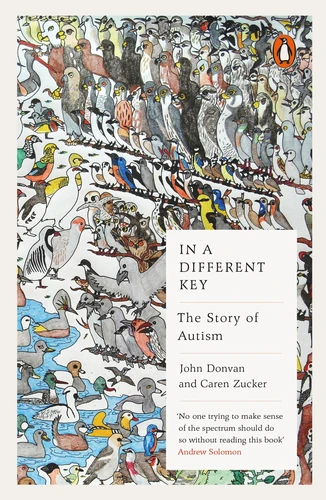
The stunning history of autism as it has been discovered and felt by parents, children and doctorsNearly seventy-five years ago, Donald Triplett of Forest, Mississippi became the first child diagnosed with autism. In a Different Key tells the extraordinary story of the world his diagnosis created - a riveting human drama that takes us across continents and through some of the great social movements of the twentieth century.
The history of autism is, above all, the story of families fighting for a place in the world for their children. It is the story of women like Ruth Sullivan, who rebelled against a medical establishment that blamed "refrigerator mothers" for causing autism, of fathers who pushed scientists to dig harder for treatments, of parents who forced schools to accept their children. But many others played starring roles too: doctors like Leo Kanner, who pioneered our understanding of autism, scientists who sparred over how to treat autism, and those with autism, like Temple Grandin and Ari Ne'eman, who explained their inner worlds and championed a philosophy of 'neurodiversity'.
This is also a story of fierce controversy: from the question of whether there is truly an autism 'epidemic', and whether vaccines played a part in it, to scandals involving 'facilitated communication', one of many treatments that have proved to be blind alleys. And there are dark turns too: we learn about experimenters feeding LSD to children with autism, or shocking them with electricity to change their behavior; and the authors reveal, for the first time, that Hans Asperger, discoverer of the syndrome named after him, may have cooperated with the Nazis in sending disabled children to their deaths.
By turns intimate and panoramic, In a Different Key takes us on a journey from an era when families were shamed and children were condemned to institutions, to one in which parents and people with autism push not simply for inclusion, but for a new understanding of autism: as difference rather than disability.
The history of autism is, above all, the story of families fighting for a place in the world for their children. It is the story of women like Ruth Sullivan, who rebelled against a medical establishment that blamed "refrigerator mothers" for causing autism, of fathers who pushed scientists to dig harder for treatments, of parents who forced schools to accept their children. But many others played starring roles too: doctors like Leo Kanner, who pioneered our understanding of autism, scientists who sparred over how to treat autism, and those with autism, like Temple Grandin and Ari Ne'eman, who explained their inner worlds and championed a philosophy of 'neurodiversity'.
This is also a story of fierce controversy: from the question of whether there is truly an autism 'epidemic', and whether vaccines played a part in it, to scandals involving 'facilitated communication', one of many treatments that have proved to be blind alleys. And there are dark turns too: we learn about experimenters feeding LSD to children with autism, or shocking them with electricity to change their behavior; and the authors reveal, for the first time, that Hans Asperger, discoverer of the syndrome named after him, may have cooperated with the Nazis in sending disabled children to their deaths.
By turns intimate and panoramic, In a Different Key takes us on a journey from an era when families were shamed and children were condemned to institutions, to one in which parents and people with autism push not simply for inclusion, but for a new understanding of autism: as difference rather than disability.