SOLDES
Jusqu'à -70% sur une sélection d'articles*

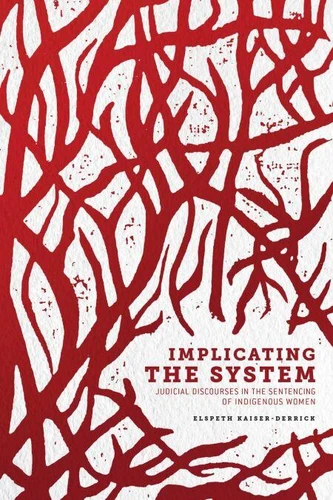
Implicating the System. Judicial Discourses in the Sentencing of Indigenous Women
Par :Formats :
Disponible dans votre compte client Decitre ou Furet du Nord dès validation de votre commande. Le format ePub est :
- Compatible avec une lecture sur My Vivlio (smartphone, tablette, ordinateur)
- Compatible avec une lecture sur liseuses Vivlio
- Pour les liseuses autres que Vivlio, vous devez utiliser le logiciel Adobe Digital Edition. Non compatible avec la lecture sur les liseuses Kindle, Remarkable et Sony
 , qui est-ce ?
Notre partenaire de plateforme de lecture numérique où vous retrouverez l'ensemble de vos ebooks gratuitement
Pour en savoir plus sur nos ebooks, consultez notre aide en ligne ici
C'est si simple ! Lisez votre ebook avec l'app Vivlio sur votre tablette, mobile ou ordinateur :

- Nombre de pages414
- FormatePub
- ISBN978-0-88755-553-4
- EAN9780887555534
- Date de parution15/03/2019
- Protection num.Digital Watermarking
- Taille4 Mo
- Infos supplémentairesepub
- ÉditeurUniversity of Manitoba Press
Résumé
Indigenous women continue to be overrepresented in Canadian prisons; research demonstrates how their overincarceration and often extensive experiences of victimization are interconnected with and through ongoing processes of colonization. Implicating the System: Judicial Discourses in the Sentencing of Indigenous Women explores how judges navigate these issues in sentencing by examining related discourses in selected judgments from a review of 175 decisions.
The feminist theory of the victimization-criminalization continuum informs Elspeth Kaiser-Derrick's work. She examines its overlap with the Gladue analysis, foregrounding decisions that effectively integrate gendered understandings of Indigenous women's victimization histories, and problematizing those with less contextualized reasoning. Ultimately, she contends that judicial use of the victimization-criminalization continuum deepens the Gladue analysis and augments its capacity to further its objectives of alternatives to incarceration.
Kaiser-Derrick discusses how judicial discourses about victimization intersect with those about rehabilitation and treatment, and suggests associated problems, particularly where prison is characterized as a place of healing. Finally, she shows how recent incursions into judicial discretion, through legislative changes to the conditional sentencing regime that restrict the availability of alternatives to incarceration, are particularly concerning for Indigenous women in the system.
The feminist theory of the victimization-criminalization continuum informs Elspeth Kaiser-Derrick's work. She examines its overlap with the Gladue analysis, foregrounding decisions that effectively integrate gendered understandings of Indigenous women's victimization histories, and problematizing those with less contextualized reasoning. Ultimately, she contends that judicial use of the victimization-criminalization continuum deepens the Gladue analysis and augments its capacity to further its objectives of alternatives to incarceration.
Kaiser-Derrick discusses how judicial discourses about victimization intersect with those about rehabilitation and treatment, and suggests associated problems, particularly where prison is characterized as a place of healing. Finally, she shows how recent incursions into judicial discretion, through legislative changes to the conditional sentencing regime that restrict the availability of alternatives to incarceration, are particularly concerning for Indigenous women in the system.