Writes strategic nonfiction on business, power, and economic systems with a clean analytical style grounded in real-world case studies.
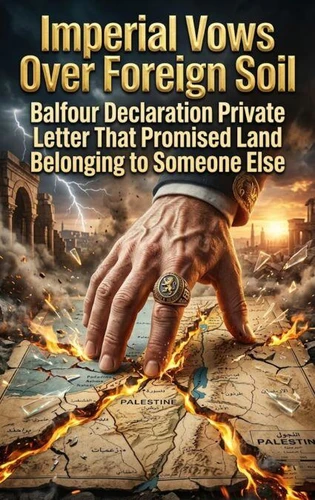
Imperial Vows Over Foreign Soil. Balfour Declaration Private Letter That Promised Land Belonging to Someone Else
Par :Formats :
Disponible dans votre compte client Decitre ou Furet du Nord dès validation de votre commande. Le format ePub est :
- Compatible avec une lecture sur My Vivlio (smartphone, tablette, ordinateur)
- Compatible avec une lecture sur liseuses Vivlio
- Pour les liseuses autres que Vivlio, vous devez utiliser le logiciel Adobe Digital Edition. Non compatible avec la lecture sur les liseuses Kindle, Remarkable et Sony
 , qui est-ce ?
Notre partenaire de plateforme de lecture numérique où vous retrouverez l'ensemble de vos ebooks gratuitement
Pour en savoir plus sur nos ebooks, consultez notre aide en ligne ici
C'est si simple ! Lisez votre ebook avec l'app Vivlio sur votre tablette, mobile ou ordinateur :

- Nombre de pages163
- FormatePub
- ISBN978-3-565-45188-3
- EAN9783565451883
- Date de parution21/05/2026
- Protection num.pas de protection
- Taille2 Mo
- Infos supplémentairesepub
- ÉditeurEmphaloz Publishing House
Résumé
This book investigates how imperial promises over foreign soil generate lasting tension when a private letter commits a government to support a national home for one people while having previously pledged the same territory to another. The Balfour Declaration exemplifies such a clash, revealing how wartime assurances can intertwine and contradict, setting the stage for decades of dispute. Its issuance as a covert commitment during the First World War shows how private diplomacy can undermine public agreements and fuel long-term conflict.
The declaration originated as a short letter from the foreign secretary to a leader of the British Jewish community, intended for transmission to the Zionist Federation.
Within the War Cabinet, leaders approved the statement after weighing its potential to gain Jewish support for the Allied cause against the Ottoman Empire. At the same time, the British government had already committed to Arab independence through the Hussein-McMahon correspondence and had agreed with France on an international administration for much of Palestine under the Sykes-Picot arrangement.
These concurrent pledges created tension between private assurances and public obligations. The decision-making hierarchy concentrated authority in a small circle of ministers, limiting broader debate and enabling the issuance of a commitment that later appeared contradictory to earlier wartime promises. Following the war, the declaration became incorporated into the British Mandate for Palestine, shaping immigration and land policies that favored Jewish settlement while disregarding Arab demands for self-determination.
The resulting disparity between promise and practice fueled resentment and contributed to a protracted nationalist conflict.
Within the War Cabinet, leaders approved the statement after weighing its potential to gain Jewish support for the Allied cause against the Ottoman Empire. At the same time, the British government had already committed to Arab independence through the Hussein-McMahon correspondence and had agreed with France on an international administration for much of Palestine under the Sykes-Picot arrangement.
These concurrent pledges created tension between private assurances and public obligations. The decision-making hierarchy concentrated authority in a small circle of ministers, limiting broader debate and enabling the issuance of a commitment that later appeared contradictory to earlier wartime promises. Following the war, the declaration became incorporated into the British Mandate for Palestine, shaping immigration and land policies that favored Jewish settlement while disregarding Arab demands for self-determination.
The resulting disparity between promise and practice fueled resentment and contributed to a protracted nationalist conflict.