Sarah Carter FRSC is Professor and Henry Marshall Tory Chair in the Department of History and Classics and the Faculty of Native Studies at the University of Alberta.
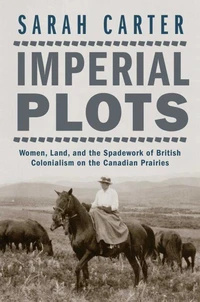
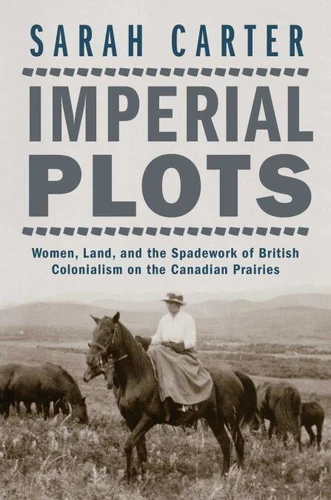
Imperial Plots. Women, Land, and the Spadework of British Colonialism on the Canadian Prairies
Par :Formats :
Disponible dans votre compte client Decitre ou Furet du Nord dès validation de votre commande. Le format ePub est :
- Compatible avec une lecture sur My Vivlio (smartphone, tablette, ordinateur)
- Compatible avec une lecture sur liseuses Vivlio
- Pour les liseuses autres que Vivlio, vous devez utiliser le logiciel Adobe Digital Edition. Non compatible avec la lecture sur les liseuses Kindle, Remarkable et Sony
 , qui est-ce ?
Notre partenaire de plateforme de lecture numérique où vous retrouverez l'ensemble de vos ebooks gratuitement
Pour en savoir plus sur nos ebooks, consultez notre aide en ligne ici
C'est si simple ! Lisez votre ebook avec l'app Vivlio sur votre tablette, mobile ou ordinateur :

- FormatePub
- ISBN978-0-88755-530-5
- EAN9780887555305
- Date de parution07/10/2016
- Protection num.Digital Watermarking
- Taille14 Mo
- Infos supplémentairesepub
- ÉditeurUniversity of Manitoba Press
Résumé
WINNER Governor General's History Award for Scholarly Research, 2017
WINNER Best Scholarly Book in Canadian History Prize, Canadian Historical Association, 2017
WINNER CLIO History Prize (Prairies), Canadian Historical Association, 2017
WINNER Gita Chaudhuri Prize, Western Association of Women Historians, 2017
Sarah Carter's Imperial Plots: Women, Land, and the Spadework of British Colonialism on the Canadian Prairies examines the goals, aspirations, and challenges met by women who sought land of their own.
Supporters of British women homesteaders argued they would contribute to the "spade-work" of the Empire through their imperial plots, replacing foreign settlers and relieving Britain of its "surplus" women.
Yet far into the twentieth century there was persistent opposition to the idea that women could or should farm: British women were to be exemplars of an idealized white femininity, not toiling in the fields. In Canada, heated debates about women farmers touched on issues of ethnicity, race, gender, class, and nation. Despite legal and cultural obstacles and discrimination, British women did acquire land as homesteaders, farmers, ranchers, and speculators on the Canadian prairies.
They participated in the project of dispossessing Indigenous people. Their complicity was, however, ambiguous and restricted because they were excluded from the power and privileges of their male counterparts. Imperial Plots depicts the female farmers and ranchers of the prairies, from the Indigenous women agriculturalists of the Plains to the array of women who resolved to work on the land in the first decades of the twentieth century.
Yet far into the twentieth century there was persistent opposition to the idea that women could or should farm: British women were to be exemplars of an idealized white femininity, not toiling in the fields. In Canada, heated debates about women farmers touched on issues of ethnicity, race, gender, class, and nation. Despite legal and cultural obstacles and discrimination, British women did acquire land as homesteaders, farmers, ranchers, and speculators on the Canadian prairies.
They participated in the project of dispossessing Indigenous people. Their complicity was, however, ambiguous and restricted because they were excluded from the power and privileges of their male counterparts. Imperial Plots depicts the female farmers and ranchers of the prairies, from the Indigenous women agriculturalists of the Plains to the array of women who resolved to work on the land in the first decades of the twentieth century.