
Dr. Alireza Kamali Dehkordi is a scholar in Medical Molecular Biology and Immunology, specializing in immunochemistry and antibody engineering. His academic work focuses on the molecular mechanisms of antigen-antibody interactions, immune regulation, and translational biomedical applications. He develops advanced university-level educational resources that integrate rigorous scientific methodology with clinically oriented molecular and immunological concepts.
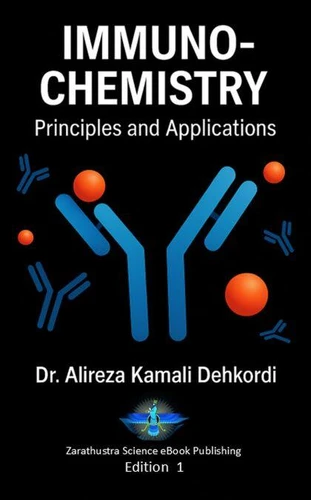
Immunochemistry: Principles, Methods, and Applications
Par :Formats :
Disponible dans votre compte client Decitre ou Furet du Nord dès validation de votre commande. Le format ePub est :
- Compatible avec une lecture sur My Vivlio (smartphone, tablette, ordinateur)
- Compatible avec une lecture sur liseuses Vivlio
- Pour les liseuses autres que Vivlio, vous devez utiliser le logiciel Adobe Digital Edition. Non compatible avec la lecture sur les liseuses Kindle, Remarkable et Sony
 , qui est-ce ?
Notre partenaire de plateforme de lecture numérique où vous retrouverez l'ensemble de vos ebooks gratuitement
Pour en savoir plus sur nos ebooks, consultez notre aide en ligne ici
C'est si simple ! Lisez votre ebook avec l'app Vivlio sur votre tablette, mobile ou ordinateur :

- FormatePub
- ISBN8233560385
- EAN9798233560385
- Date de parution20/02/2026
- Protection num.pas de protection
- Infos supplémentairesepub
- ÉditeurLinda Balsamo
Résumé
Preface Immunochemistry lies at the intersection of molecular immunology, analytical chemistry, biophysics, and clinical diagnostics. This book presents a comprehensive and quantitative framework for understanding antigen-antibody interactions, assay engineering, and translational diagnostic applications. It is designed for graduate students, laboratory professionals, and researchers in biomedical sciences.
Immunochemistry is the discipline that examines the chemical, structural, and physicochemical principles underlying immune recognition and effector function. It bridges biochemistry, structural biology, thermodynamics, and molecular immunology to explain how antibodies, antigens, complement proteins, and immune receptors interact with exquisite specificity and regulated affinity. At its core, immunochemistry addresses a fundamental biological problem: how macromolecules discriminate between self and non-self with high specificity while maintaining sufficient flexibility for adaptive diversity.
This chapter provides a graduate-level treatment of the molecular, thermodynamic, structural, and applied principles that define the field.
Immunochemistry is the discipline that examines the chemical, structural, and physicochemical principles underlying immune recognition and effector function. It bridges biochemistry, structural biology, thermodynamics, and molecular immunology to explain how antibodies, antigens, complement proteins, and immune receptors interact with exquisite specificity and regulated affinity. At its core, immunochemistry addresses a fundamental biological problem: how macromolecules discriminate between self and non-self with high specificity while maintaining sufficient flexibility for adaptive diversity.
This chapter provides a graduate-level treatment of the molecular, thermodynamic, structural, and applied principles that define the field.
A propos de Alireza Kamali Dehkordi
34,49 €
33,49 €