
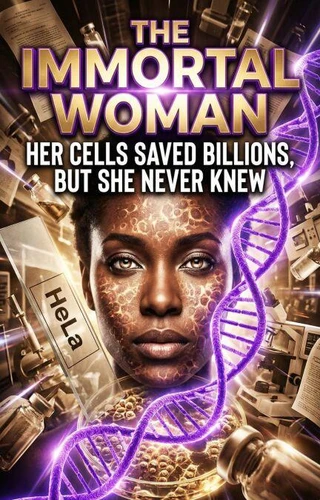
Immortal Woman. Her Cells Saved Billions, But She Never Knew
Par :Formats :
Disponible dans votre compte client Decitre ou Furet du Nord dès validation de votre commande. Le format ePub est :
- Compatible avec une lecture sur My Vivlio (smartphone, tablette, ordinateur)
- Compatible avec une lecture sur liseuses Vivlio
- Pour les liseuses autres que Vivlio, vous devez utiliser le logiciel Adobe Digital Edition. Non compatible avec la lecture sur les liseuses Kindle, Remarkable et Sony
 , qui est-ce ?
Notre partenaire de plateforme de lecture numérique où vous retrouverez l'ensemble de vos ebooks gratuitement
Pour en savoir plus sur nos ebooks, consultez notre aide en ligne ici
C'est si simple ! Lisez votre ebook avec l'app Vivlio sur votre tablette, mobile ou ordinateur :

- Nombre de pages211
- FormatePub
- ISBN978-3-565-25708-9
- EAN9783565257089
- Date de parution18/02/2026
- Protection num.pas de protection
- Taille943 Ko
- Infos supplémentairesepub
- ÉditeurEmphaloz Publishing House
Résumé
In 1951, a poor African American tobacco farmer named Henrietta Lacks visited Johns Hopkins Hospital complaining of a "knot" in her womb. Doctors took a biopsy of her aggressive cervical cancer without her knowledge or consent. Henrietta died months later, but her cells did something no human cells had ever done before in a lab: they didn't die. They multiplied.
"The Immortal Woman" tells the story of the "HeLa" cell line, the first immortal human cells ever grown in culture.
These cells became the workhorse of modern biology, essential for developing the polio vaccine, cancer treatments, and gene mapping. They have been bought and sold by the billions. Yet for decades, Henrietta's family lived in poverty, unable to afford health insurance, completely unaware that a part of their mother was alive and fueling a multi-billion dollar industry. This book is a powerful exploration of medical ethics, race, and the ownership of our own bodies.
It honors the woman behind the microscope slide.
These cells became the workhorse of modern biology, essential for developing the polio vaccine, cancer treatments, and gene mapping. They have been bought and sold by the billions. Yet for decades, Henrietta's family lived in poverty, unable to afford health insurance, completely unaware that a part of their mother was alive and fueling a multi-billion dollar industry. This book is a powerful exploration of medical ethics, race, and the ownership of our own bodies.
It honors the woman behind the microscope slide.