OFFRE LISEUSES
Une liseuse achetée = une housse offerte* jusqu'au 21 juin

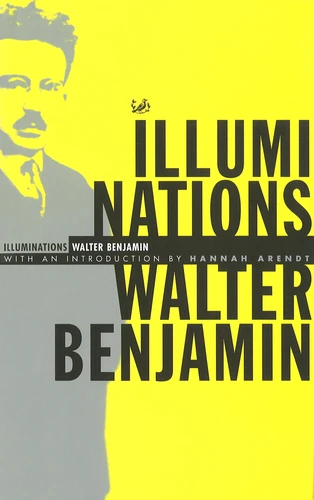
Illuminations
Par :Formats :
Disponible dans votre compte client Decitre ou Furet du Nord dès validation de votre commande. Le format ePub protégé est :
- Compatible avec une lecture sur My Vivlio (smartphone, tablette, ordinateur)
- Compatible avec une lecture sur liseuses Vivlio
- Pour les liseuses autres que Vivlio, vous devez utiliser le logiciel Adobe Digital Edition. Non compatible avec la lecture sur les liseuses Kindle, Remarkable et Sony
- Non compatible avec un achat hors France métropolitaine
 , qui est-ce ?
Notre partenaire de plateforme de lecture numérique où vous retrouverez l'ensemble de vos ebooks gratuitement
Pour en savoir plus sur nos ebooks, consultez notre aide en ligne ici
C'est si simple ! Lisez votre ebook avec l'app Vivlio sur votre tablette, mobile ou ordinateur :

- Nombre de pages272
- FormatePub
- ISBN978-1-4070-8550-0
- EAN9781407085500
- Date de parution30/06/2011
- Protection num.Adobe DRM
- Infos supplémentairesepub
- ÉditeurVintage Digital
Résumé
The literary-philosophical works of Walter Benjamin (1892-1940) rank among the most quietly influential of the post-war era, though only since his death has Benjamin achieved the fame and critical currency outside his native Germany accorded him by a select few during his lifetime. Now he is widely held to have possessed one of the most acute and original minds of the Central European culture decimated by the Nazis.
Illuminations contains his two most celebrated essays, 'The Work of Art in the Age of Mechanical Reproduction' and 'Theses on the Philosophy of History', as well as others on the art of translation, Kafka, storytelling, Baudelaire, Brecht's epic theatre, Proust and an anatomy of his own obsession, book collecting. The essay is Benjamin's domain; those collected in this now legendary volume offer the best possible access to his singular and significant achievement.
In a stimulating introduction, Hannah Arendt reveals how Benjamin's life and work are a prism to his times, and identifies him as possessing the rare ability to think poetically.
Illuminations contains his two most celebrated essays, 'The Work of Art in the Age of Mechanical Reproduction' and 'Theses on the Philosophy of History', as well as others on the art of translation, Kafka, storytelling, Baudelaire, Brecht's epic theatre, Proust and an anatomy of his own obsession, book collecting. The essay is Benjamin's domain; those collected in this now legendary volume offer the best possible access to his singular and significant achievement.
In a stimulating introduction, Hannah Arendt reveals how Benjamin's life and work are a prism to his times, and identifies him as possessing the rare ability to think poetically.