
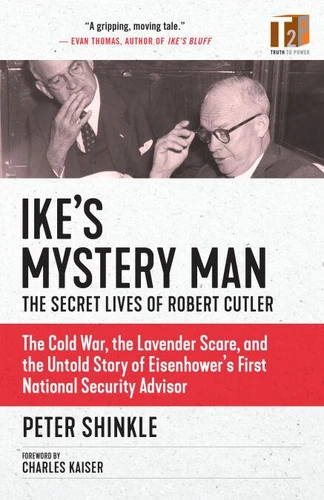
Ike's Mystery Man. The Secret Lives of Robert Cutler
Par : ,Formats :
Disponible dans votre compte client Decitre ou Furet du Nord dès validation de votre commande. Le format ePub protégé est :
- Compatible avec une lecture sur My Vivlio (smartphone, tablette, ordinateur)
- Compatible avec une lecture sur liseuses Vivlio
- Pour les liseuses autres que Vivlio, vous devez utiliser le logiciel Adobe Digital Edition. Non compatible avec la lecture sur les liseuses Kindle, Remarkable et Sony
- Non compatible avec un achat hors France métropolitaine
 , qui est-ce ?
Notre partenaire de plateforme de lecture numérique où vous retrouverez l'ensemble de vos ebooks gratuitement
Pour en savoir plus sur nos ebooks, consultez notre aide en ligne ici
C'est si simple ! Lisez votre ebook avec l'app Vivlio sur votre tablette, mobile ou ordinateur :

- Nombre de pages416
- FormatePub
- ISBN978-1-58642-315-5
- EAN9781586423155
- Date de parution18/01/2022
- Protection num.Adobe DRM
- Taille28 Mo
- Infos supplémentairesepub
- ÉditeurSteerforth
Résumé
The Cold War, The Lavender Scare, and the Untold Story of Eisenhower's First National Security Advisor. President Eisenhower's National Security Advisor Robert "Bobby" Cutler -- working alongside Ike and also the Dulles brothers at the CIA and State Department -- shaped US Cold War strategy in far more consequential ways than previously understood. A lifelong Republican, Cutler also served three Democratic presidents.
A charming raconteur, he was a tight-lipped loyalist who worked behind the scenes to get things done. Cutler was in love with a man half his age, naval intelligence officer and NSC staffer Skip Koons. Cutler poured his emotions into a six-volume diary and dozens of letters that have been hidden from history. Steve Benedict, who was White House security officer, Cutlers' friend and Koons' friend and former lover, preserved Cutler's papers.
All three men served Eisenhower at a time when anyone suspected of "sexual perversion", i.e. homosexuality, was banned from federal employment and vulnerable to security sweeps by the FBI. This gripping account reveals in fascinating detail Cutler's intimate thoughts and feelings about US efforts to confront Soviet expansion and aggression while having to contend with the reality that tens of millions of people would die in a first nuclear strike, and that a full nuclear exchange would likely lead to human extinction.
And Shinkle recounts with sensitivity the daily challenges and personal dramas of a small but representative group or patriotic gay men who were forced to hide essential aspects of who they were in order to serve a president they admired and a country they loved.
A charming raconteur, he was a tight-lipped loyalist who worked behind the scenes to get things done. Cutler was in love with a man half his age, naval intelligence officer and NSC staffer Skip Koons. Cutler poured his emotions into a six-volume diary and dozens of letters that have been hidden from history. Steve Benedict, who was White House security officer, Cutlers' friend and Koons' friend and former lover, preserved Cutler's papers.
All three men served Eisenhower at a time when anyone suspected of "sexual perversion", i.e. homosexuality, was banned from federal employment and vulnerable to security sweeps by the FBI. This gripping account reveals in fascinating detail Cutler's intimate thoughts and feelings about US efforts to confront Soviet expansion and aggression while having to contend with the reality that tens of millions of people would die in a first nuclear strike, and that a full nuclear exchange would likely lead to human extinction.
And Shinkle recounts with sensitivity the daily challenges and personal dramas of a small but representative group or patriotic gay men who were forced to hide essential aspects of who they were in order to serve a president they admired and a country they loved.